

Folic acid gets all the attention when you start trying for a baby, and rightly so. Iodine rarely gets a mention. Yet it’s one of the few nutrients that UK dietitians specifically say you should get right in the months before you conceive, not just once you’re pregnant, and many women in the UK fall short without realising.
The short answer: yes, iodine matters before pregnancy. Your thyroid uses it to make thyroid hormones, and during pregnancy your baby relies on those hormones for normal brain development. The British Dietetic Association recommends 150 µg a day for adults and 200 µg in pregnancy and breastfeeding, and it advises building up good iodine stores for several months before you conceive. Milk, dairy, white fish and eggs are the main UK sources. If you rarely eat them, a supplement containing iodine can help fill the gap, but kelp and high-dose iodine are best avoided.
This guide explains why iodine matters, how much you need, where to find it in a normal UK diet, and who should check with a GP before taking it.
Why does iodine matter before pregnancy?
Iodine is a building block of thyroid hormones, which help control growth and metabolism. In pregnancy, they also matter for how a baby’s brain develops, and in the early weeks the baby depends entirely on the mother’s supply.
That’s why timing counts. The British Dietetic Association’s iodine fact sheet explains that your thyroid can build up stores of iodine, which help it work well in early pregnancy. Its advice is that women of childbearing age, especially those planning a pregnancy, should meet the adult recommendation for several months before they conceive. By the time a test turns positive, the first few weeks have already passed.
Is iodine deficiency common in the UK?
More common than most people expect. Unlike many countries, the UK has no programme of adding iodine to salt, and iodised salt is hard to find in shops. When the British Thyroid Association tested more than 700 urine samples from schoolgirls aged 14 to 15 across nine UK centres, 51% had results suggesting mild iodine deficiency and 16% moderate deficiency (Vanderpump et al., The Lancet, 2011). Low milk intake was one of the factors linked to lower levels.
A second UK study looked at more than 1,000 pregnant women in the long-running Children of the 90s study in Bristol. Women with lower iodine levels in the first trimester were more likely to have children who scored in the lowest quarter for verbal IQ and reading ability at ages 8 and 9 (Bath et al., The Lancet, 2013). It’s an observational study, so it shows a link rather than proof, but it’s a big part of why UK researchers began to see iodine in pregnancy as a public health issue.
How much iodine do you need when trying to conceive?
The numbers vary slightly depending on who you ask. The NHS says adults need 140 µg a day. The BDA uses the European recommendations instead:
- Adults, including while trying to conceive: 150 µg a day
- Pregnancy: 200 µg a day
- Breastfeeding: 200 µg a day
There’s currently no official UK advice for every woman to take an iodine supplement. The BDA’s view is that it’s better to meet your needs through food where you can, and that a supplement containing iodine can be useful if you don’t eat enough iodine-rich foods.
Which foods are high in iodine?
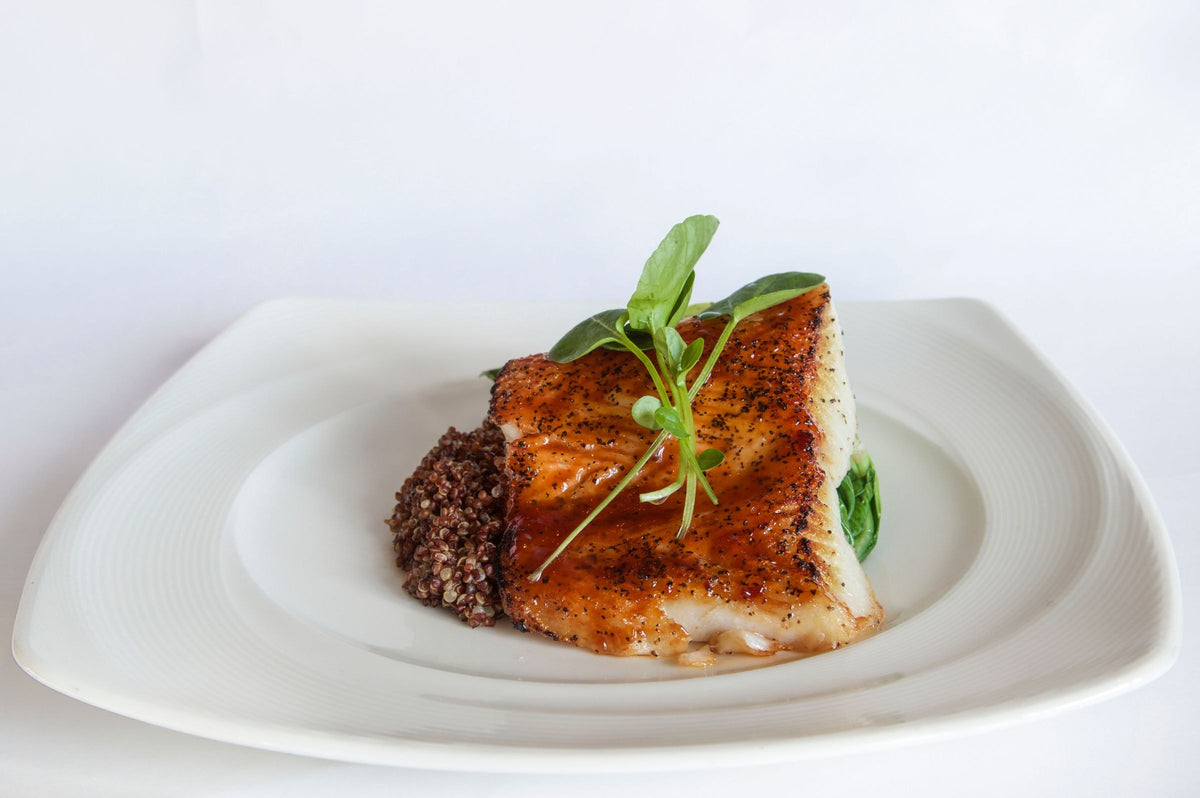
In the UK, milk and dairy are where most of us get our iodine, followed by fish. White fish is a far richer source than oily fish. These are the BDA’s rough averages per portion, although the real amount varies with the season, the soil and farming practices:
- Haddock (120 g): about 390 µg
- Cod (120 g): about 230 µg
- A glass of cow’s milk (200 ml): 50 to 100 µg, usually higher in winter
- A pot of yoghurt (150 g): 50 to 100 µg
- One egg: about 25 µg
- Cheese (40 g): about 15 µg
- Salmon fillet (100 g): about 14 µg
So a woman who has milk in her tea, a yoghurt most days and white fish once a week is probably doing fine. Someone who has switched to plant milk and rarely eats fish could easily be getting well under half of what she needs. Our guide to what to eat for fertility covers the wider diet picture.
What about plant milks, vegans and vegetarians?
This is where the gap tends to open up. Plant foods contain very little iodine, and the amount depends on the soil they were grown in. The NHS notes that anyone on a strict vegan diet, with no fish, eggs or dairy, may want to choose fortified foods or consider an iodine supplement.
Some oat and soya drinks are fortified with iodine, but plenty aren’t, and some contain only a little. It’s worth turning the carton over and checking for iodine (sometimes listed as potassium iodide) in the ingredients. Women who avoid dairy because of an allergy or intolerance are in the same position.
Is seaweed or kelp a good source of iodine?
It’s best avoided as your main source. Seaweed contains very high and unpredictable amounts of iodine, and brown seaweeds like kelp are the worst offenders. The BDA advises not eating brown seaweed or kelp more than once a week, especially in pregnancy, and it doesn’t recommend kelp supplements as a way to get iodine. Too much iodine can upset the thyroid just as too little can.
Can you have too much iodine?
Yes. Long-term high doses can change how the thyroid works. The NHS says that taking 0.5 mg (500 µg) or less a day from supplements is unlikely to cause harm, and the BDA suggests total intake for adults shouldn’t go above about 600 µg a day.
The easiest way to stay on the safe side is not to double up. If you’re taking a fertility supplement and a separate pregnancy multivitamin, add up the iodine on both labels before you take them together.
Who should talk to a GP first?
Speak to your GP, pharmacist or specialist before taking anything containing iodine if you:
- have an underactive or overactive thyroid, or take thyroid medication such as levothyroxine
- have had thyroid surgery, a goitre or thyroid nodules
- have a family history of thyroid problems and haven’t been tested
- are under a fertility clinic, as they may have their own advice on supplements
If you already have a thyroid condition, it’s worth asking whether your TSH should be checked before you start trying. Our guide to thyroid, TSH and trying to conceive explains what the numbers mean. And if you haven’t conceived after a year of trying, or sooner if you’re 36 or over, our guide on when to see a GP has the NHS timings.
A simple iodine checklist before pregnancy
- Look at what you actually eat in a normal week. Milk, yoghurt, cheese, eggs and white fish are the main UK sources.
- Check your plant milk. If it isn’t fortified with iodine, consider switching to one that is.
- Aim for white fish once or twice a week, following the NHS advice on fish in pregnancy once you conceive.
- Skip kelp and other seaweed supplements.
- Don’t double up on iodine from several supplements.
- Remember the other two essentials. The NHS advises 400 µg of folic acid a day before conception and until 12 weeks, plus 10 µg of vitamin D. Our guides to methylfolate vs folic acid, vitamin D before pregnancy and iron before pregnancy cover them in detail.
For everything else that matters for both partners, see our complete UK guide to male and female fertility.
Where Her Fertility fits
Food comes first, and a supplement can’t make up for a diet that’s missing the basics. But if you rarely eat dairy or fish, or you simply want one routine that covers the key preconception nutrients, it makes sense to check that iodine is in there.
Her Fertility contains 150 µg of iodine (as potassium iodide) in each daily serving of four capsules. That’s in line with the adult recommendation and well below the NHS’s 500 µg supplement guide. Iodine contributes to the normal production of thyroid hormones and normal thyroid function, and the 200 µg of selenium alongside it also contributes to normal thyroid function. The same serving includes 400 µg of active folate (5-MTHF), 2500 IU of vitamin D3, 10 mg of iron, 500 µg of vitamin B12 and 20 mg of zinc, together with 300 mg CoQ10, 400 mg NAC and KSM-66® ashwagandha. It’s vegetarian and made in the UK.
If you’re both getting ready, the Him & Her Fertility Bundle lets you start together, and you can see the full range on our fertility support page. Once you get a positive test, our guide on what to do with fertility supplements after a positive test explains the next step.
Iodine before pregnancy: frequently asked questions
Do you need iodine before pregnancy?
Yes. Iodine is needed to make thyroid hormones, which matter for a baby’s brain development in pregnancy. The British Dietetic Association advises women planning a pregnancy to meet the adult recommendation of 150 µg a day for several months before they conceive, so the thyroid has good stores.
How much iodine should I take when trying to conceive?
The NHS says adults need 140 µg of iodine a day, and the BDA uses 150 µg for adults and 200 µg in pregnancy and breastfeeding. Most of this can come from food. The NHS says 500 µg or less a day from supplements is unlikely to cause harm.
What foods are high in iodine in the UK?
Milk and dairy are the main source for most people in the UK, with a 200 ml glass of milk providing roughly 50 to 100 µg. White fish such as cod and haddock is very rich in iodine, and eggs provide smaller amounts.
Is iodine in prenatal vitamins safe?
Supplements providing 500 µg of iodine a day or less are unlikely to cause harm, according to the NHS. Avoid taking several products that all contain iodine, avoid kelp supplements, and speak to your GP first if you have a thyroid condition or take thyroid medication.
Do vegans need an iodine supplement before pregnancy?
Women on a strict vegan diet may not get enough iodine, because plant foods contain very little. The NHS suggests choosing iodine-fortified foods such as some oat or soya drinks, or considering an iodine supplement after advice from a healthcare professional.
This article is general information for UK readers, not medical advice. Her Fertility is a food supplement, not a medicine, and should not be used as a substitute for a varied, balanced diet and a healthy lifestyle. Talk to your GP or pharmacist before starting supplements, especially if you take medication, have a thyroid or other health condition, or are pregnant. Individual results vary.



Leave a comment
All comments are moderated before being published.
This site is protected by hCaptcha and the hCaptcha Privacy Policy and Terms of Service apply.