

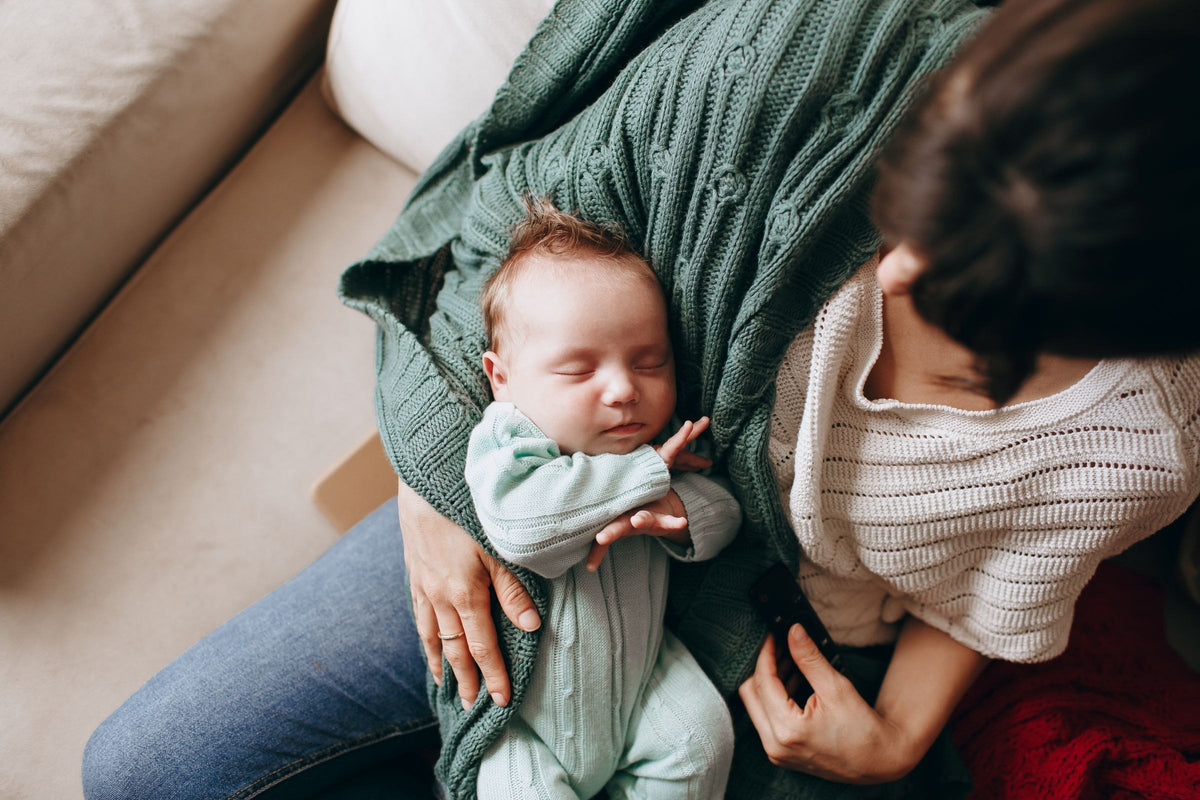
Everyone warns you about the sleepless nights. What nobody quite prepares you for is the bone-deep tiredness that can hang around for months: forgetting words mid-sentence, crying at adverts, feeling like you’re running on fumes even on a “good” night. If that sounds familiar, you’re far from alone, and it’s worth knowing which kind of tired is normal and which deserves a chat with your GP.
The short answer: being very tired after having a baby is normal, mainly because of broken sleep, night feeds and your body recovering from pregnancy and birth. It usually eases as your baby starts sleeping for longer stretches. But if you can’t sleep even when your baby is asleep, you feel tired all the time, or you feel low, hopeless or anxious, the NHS says these could be signs of postnatal depression and you should talk to your GP or health visitor. Anaemia (low iron) and thyroid changes after birth can also cause ongoing tiredness, and both can be checked with a simple blood test.
This guide covers why new mums feel so drained, the medical causes worth ruling out, what genuinely helps, and where nutrition and supplements do and don’t fit.
Why am I so tired after giving birth?
There’s rarely one reason. Postnatal tiredness is usually several things stacking up at once:
- Broken sleep. Newborns wake several times a night to feed. Even if you add up seven hours in bed, sleep chopped into short chunks doesn’t feel the same as one long stretch.
- Physical recovery. Your body has just been through pregnancy and either a vaginal birth or major surgery if you had a caesarean. Healing takes energy, and recovery isn’t finished at the 6-week mark for everyone.
- Feeding. Whether you breastfeed, bottle feed or both, feeding round the clock is physically and mentally demanding.
- Mental load. Constantly listening out for your baby, decisions, visitors, worry. Your brain rarely gets to switch off, which makes it harder to rest even when you have the chance.
- Skipping your own basics. Meals become toast eaten standing up, water gets forgotten, and getting outside feels like a military operation.
The NHS describes looking after a baby as really tiring, especially in the first few months, and says most parents cope with a certain level of tiredness (NHS: Sleep and tiredness after having a baby). The key word is “a certain level”. Tiredness that doesn’t lift, or that comes with changes in mood, is worth looking at properly.
How long does tiredness last after having a baby?
There’s no fixed timeline, because it depends so much on how your baby sleeps, how the birth went and how much support you have. For many parents, things start to feel more manageable as babies sleep for longer periods, which the NHS reassures will happen as they get older. The phase of waking several times a night doesn’t last forever.
A useful rule of thumb: if you’re getting more sleep than you were but still feel just as exhausted, or the tiredness is getting worse rather than better, that’s a sign something else may be going on.
Is it normal tiredness or postnatal depression?
This is the big one, because the two can look alike. The NHS points out that if you can’t sleep at night even when your baby is asleep, or you feel tired all the time, these could be signs of postnatal depression.
Feeling down, tearful, anxious or irritable for a few days after the birth is very common. It’s often called the baby blues and usually passes within 2 weeks. Postnatal depression is different. According to the NHS, symptoms can include (NHS: Postnatal depression):
- low mood, or finding it hard to enjoy anything
- feeling hopeless, or that you can’t cope
- feeling guilty or worthless, or that you’re a bad parent
- feeling anxious or worrying all the time
- difficulty sleeping, even when you get time to rest
- difficulty concentrating or making decisions
- difficult feelings about, or difficulty bonding with, your baby
Symptoms can start in pregnancy, soon after the birth or any time up to a year afterwards, and partners can be affected too. The NHS says it’s important to get help even if you only have some of the signs, and that you’re more likely to get better with support. Speak to your GP, midwife or health visitor. In many areas you can also refer yourself to NHS Talking Therapies without seeing a GP first.
Many mums worry that saying how they really feel will lead to their baby being taken away. The NHS is clear that this is very rare, and your care team’s job is to support you to look after your baby.
Get urgent help if you have thoughts of harming yourself or your baby, or if you or someone close to you notices sudden confusion, seeing or hearing things that aren’t there, or feeling unusually “high” or overactive in the weeks after birth. These can be signs of postpartum psychosis, which the NHS says is a medical emergency (NHS: Postpartum psychosis). Ask for a same-day GP assessment, call 111, or call 999 or go to A&E if anyone is in immediate danger. Samaritans are available any time on 116 123.
Could low iron be making me tired after birth?
It could. Iron deficiency anaemia is often caused by blood loss or pregnancy, and its main symptoms are tiredness and lack of energy, shortness of breath, noticeable heartbeats, paler than usual skin and headaches (NHS: Iron deficiency anaemia). If you lost a lot of blood at the birth, were anaemic during pregnancy or have had heavy bleeding since, ask your GP whether a blood test makes sense.
Don’t start high-dose iron tablets on a hunch. A full blood count tells you whether you actually need them, and your GP can advise on the right dose and how long to take it. Our guide to iron, ferritin and anaemia explains what the numbers mean.
Can your thyroid change after having a baby?
Yes. Postpartum thyroiditis is a temporary inflammation of the thyroid that the British Thyroid Foundation says affects fewer than 1 in 10 pregnancies, usually within the first 12 months after birth (British Thyroid Foundation: Postpartum thyroiditis). It often starts with signs of an overactive thyroid, such as weight loss, anxiety, feeling hot and shaky, followed by signs of an underactive one: feeling tired, low mood and feeling cold.
Because those symptoms overlap so much with normal new-parent life, it’s easy to miss. If tiredness comes with feeling cold, unexpected weight changes or a racing heart, mention it to your GP. It’s more common in women with thyroid antibodies or a history of thyroid problems. If you’ve read our post on thyroid and TSH, you’ll know how simple the blood test is.
What helps with tiredness after having a baby?
None of these are magic, but together they make a real difference. Most come straight from NHS advice for new parents:
- Sleep when your baby sleeps, at least sometimes. The washing can wait. If you’re worried about oversleeping, set an alarm.
- Share the nights. If you’re formula feeding, a partner can take some feeds. If you’re breastfeeding, they can do nappies and the morning shift so you can go back to sleep, and once feeding is established they could occasionally give a bottle of expressed milk at night.
- Say yes to help. Let a friend or relative watch the baby while you nap, or ask someone to stay for a few days if you’re on your own.
- Get outside and move a little. A daily walk with the pram, even just to the shops, is the NHS’s easiest suggestion. It sounds backwards, but gentle exercise can help you feel less tired.
- Eat regular, simple meals. Keep easy snacks and a drink within reach of wherever you feed. Protein, wholegrains, fruit and veg, and iron-rich foods like red meat, beans, lentils and fortified cereals all help.
- Go easy on caffeine. It’s tempting to live on coffee, but if you’re breastfeeding the NHS recommends no more than 200 mg of caffeine a day, roughly two mugs of coffee, because caffeine passes into breast milk.
- Don’t skip your postnatal check. You should be offered a check with your GP 6 to 8 weeks after the birth. It’s the perfect moment to say “I’m exhausted and it isn’t getting better” (NHS: Your 6-week postnatal check).
Rest matters for more than energy. As we wrote in sleep isn’t rest, it’s maintenance, your body does a lot of repair work overnight, and a new parent’s body has more repair to do than most.
Which vitamins help with tiredness after birth?
No vitamin replaces sleep, and no supplement fixes postnatal depression, anaemia or a thyroid problem. That said, a demanding few months is not the time to run short on the basics. Some nutrients have approved UK health claims that are directly relevant:
- Vitamins B6 and B12, and folate contribute to the reduction of tiredness and fatigue and to normal psychological function.
- Iron also contributes to the reduction of tiredness and fatigue, but take it only if you need it and your GP has advised a dose.
- Vitamin D contributes to the normal function of the immune system and to normal muscle function. The NHS says everyone, including breastfeeding women, should consider a daily 10 microgram vitamin D supplement in autumn and winter, and not take more than 100 micrograms a day (NHS: Vitamin D). Our vitamin D guide has more on UK dosing.
If you’re eligible, the Healthy Start scheme can provide free vitamins, and NHS prescriptions are free for 12 months after your baby is born with a maternity exemption certificate.
Is Her Revive suitable after having a baby?
Yan, our resident science nerd, built Her Revive as a daily women’s formula for energy, mood and stress resilience through different chapters of life, including the months after having a baby. It’s caffeine-free and contains vitamin B6 as P5P and methylated vitamin B12, which contribute to the reduction of tiredness and fatigue and to normal psychological function, folate, vitamin D3, zinc, selenium and iodine, alongside saffron, rhodiola, Korean ginseng, shatavari and maca. Four capsules a day, two with breakfast and two with an evening meal, so it’s one tub rather than a cupboard full of bottles.
To be straight with you about breastfeeding: the vitamins and minerals in Her Revive are everyday nutrients, but the herbal extracts haven’t been well studied in breastfeeding. If you’re breastfeeding, please check with your GP, health visitor or pharmacist before taking it, as you would with any herbal supplement. Her Revive also contains more vitamin D than the NHS’s basic 10 microgram suggestion, so don’t take it on top of another vitamin D product without advice.
Whether or not you’re feeding, think of it as support for the basics while you get through a demanding season, not a substitute for sleep, help at home or a GP check. Give it 8 to 12 weeks of daily use rather than a few days. If your partner is running on empty too, the Him & Her Revive Bundle pairs it with Him Revive, and our complete guide to daily energy and vitality covers the wider picture for both of you.
When to see a GP about tiredness after having a baby
Talk to your GP or health visitor if:
- you’re really tired and struggling to cope
- you can’t sleep even when your baby is asleep
- you feel low, hopeless, anxious or not like yourself for more than 2 weeks
- you’re breathless, dizzy, pale or notice your heart racing
- tiredness comes with feeling cold, weight changes or a lump or swelling in your neck
- the tiredness isn’t improving even as your baby sleeps more
For support with a crying or unsettled baby, the Cry-sis helpline is free on 0800 448 0737, 9am to 10pm, 7 days a week. Asking for help isn’t failing. It’s exactly what you’d tell a friend to do.
Tired after having a baby: frequently asked questions
Why am I so tired after having a baby?
Mostly because of broken sleep, night feeds and your body recovering from pregnancy and birth. The mental load of caring for a newborn adds to it. Ongoing tiredness can also be linked to low iron, thyroid changes after birth or postnatal depression, so talk to your GP or health visitor if it isn't easing.
How long does tiredness last after giving birth?
There's no fixed timeline. It usually eases as your baby sleeps for longer stretches. If you're getting more sleep but still feel just as exhausted, or it's getting worse, see your GP.
Is extreme tiredness a sign of postnatal depression?
It can be. The NHS says that not being able to sleep even when your baby is asleep, or feeling tired all the time, could be signs of postnatal depression, especially alongside low mood, hopelessness or anxiety. Speak to your GP, midwife or health visitor, even if you only have some of the signs.
Can low iron cause tiredness after birth?
Yes. Iron deficiency anaemia is often caused by blood loss or pregnancy, and tiredness is one of its main symptoms. If you lost a lot of blood at the birth or were anaemic in pregnancy, ask your GP about a blood test before taking iron tablets.
What vitamins help with tiredness after having a baby?
No vitamin replaces sleep. Vitamins B6 and B12, folate and iron contribute to the reduction of tiredness and fatigue, and the NHS suggests everyone, including breastfeeding women, consider 10 micrograms of vitamin D a day in autumn and winter. If you're breastfeeding, check with your GP, health visitor or pharmacist before taking any herbal supplement.
This article is general information for UK readers, not medical advice. Her Revive is a food supplement, not a medicine, and is not intended to diagnose, treat or prevent any condition. It should not be used as a substitute for a varied, balanced diet and a healthy lifestyle. Talk to your GP, health visitor or pharmacist before starting supplements, especially if you are breastfeeding, take medication or have a health condition. Individual results vary.



Leave a comment
All comments are moderated before being published.
This site is protected by hCaptcha and the hCaptcha Privacy Policy and Terms of Service apply.