


It sounds like an old wives’ tale: hot baths are bad for sperm. In this case, the old wives were onto something. Testicles sit outside the body for a reason, and when couples start trying for a baby, heat is one of the easiest things for him to change without spending a penny.
The short answer: yes, heat can affect sperm. Sperm are made best a few degrees below core body temperature, and studies link regular saunas, hot tubs, laptops on the lap and tight underwear with lower sperm counts or poorer movement. The good news is that the effect usually seems to be temporary. Because new sperm take around three months to develop, cutting back on heat now shows up in the sperm made over the next 90 days or so.
This guide covers what the research actually shows for each common source of heat, how worried you need to be, and the simple swaps worth making while you’re trying to conceive.
Does heat affect sperm?
It does. The NHS page on the causes of infertility puts it plainly: there’s a link between increased temperature of the scrotum and reduced semen quality. That’s why the testicles hang outside the body, and why the scrotum loosens in the warm and tightens in the cold. It’s a built-in cooling system.
Sperm production is a continuous, busy process, and it’s sensitive to that temperature balance. Push it a couple of degrees warmer, often and for long enough, and the factory slows down. Most men will never notice a thing, but if you’re already borderline on a semen analysis, it’s one of the factors worth taking off the table.
Are saunas bad for sperm?
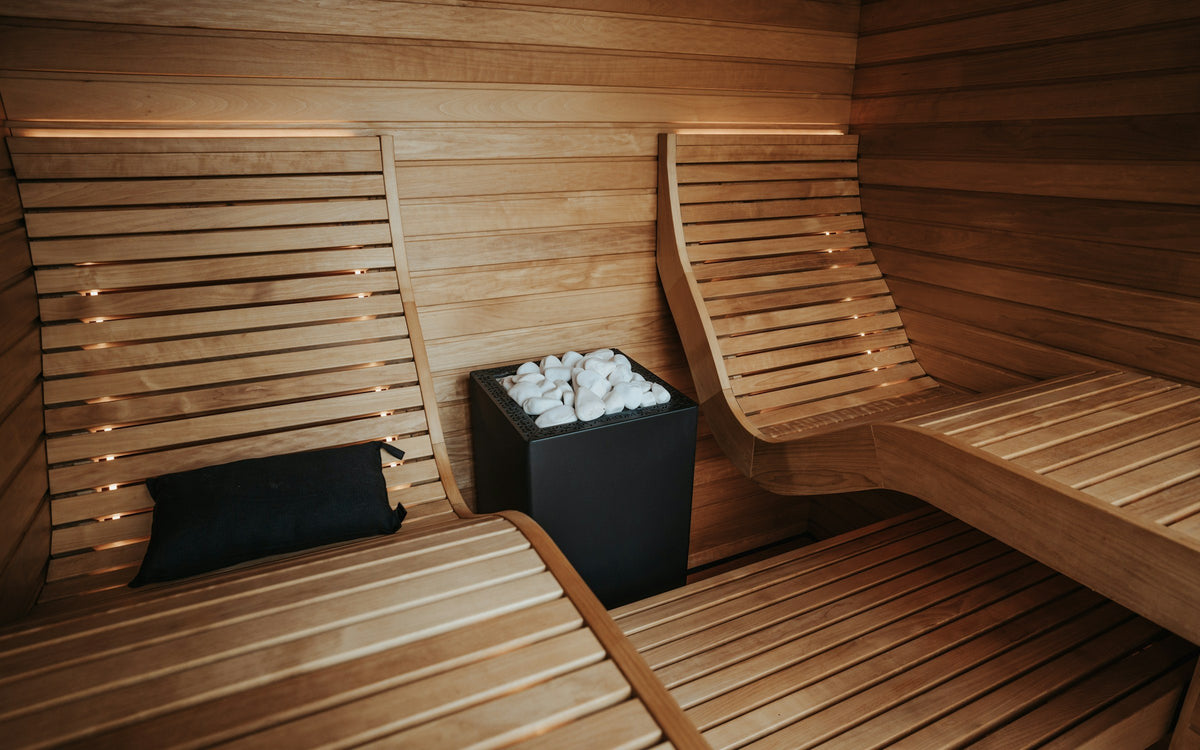
Regular saunas seem to have a real, if reversible, effect. In an Italian study, ten healthy men with normal sperm used a Finnish sauna at 80 to 90°C for 15 minutes, twice a week, for three months. By the end, their sperm count and movement had dropped significantly, and the researchers also saw changes in how the sperm DNA was packaged. Their hormone levels didn’t change. Six months after they stopped, everything had returned to normal (Garolla et al., Human Reproduction, 2013).
Ten men is a small study, so it’s a signal rather than the final word. But it fits everything else we know, and it’s a useful reminder that a habit many men see as pure wellness can work against them in this one window. If you love the sauna or steam room, you don’t have to give it up for life. Taking a break for the months you’re actively trying is a sensible trade.
Do hot baths and hot tubs affect sperm?
Wet heat looks similar. A small study from the University of California followed 11 men with fertility problems who regularly used hot tubs, Jacuzzis or hot baths. After they stopped, five of them saw a large improvement in their total motile sperm count, mostly because the sperm moved better, rising from an average of 12% moving to 34%. The men who didn’t improve were more likely to be smokers (Shefi et al., International Brazilian Journal of Urology, 2007).
Again, it’s a small group, and not everyone responded. A warm bath now and then isn’t the issue. A long, very hot soak every night, or a hot tub habit, is the kind of regular exposure worth dialling back. A shower does the same job without keeping you sitting in hot water.
Is a laptop on your lap bad for sperm?
A laptop resting on your thighs warms the scrotum noticeably, and so does the way you have to sit to hold it. In a US study of 29 healthy men, an hour with a working laptop on the lap raised scrotal temperature by about 2.6 to 2.8°C. Simply sitting with the thighs pressed together, with no laptop at all, raised it by about 2.1°C (Sheynkin et al., Human Reproduction, 2005).
A follow-up study by the same team found that a lap pad didn’t stop the rise. What helped most was sitting with the legs apart, and even then the temperature still climbed by around 1.4°C over an hour (Sheynkin et al., Fertility and Sterility, 2011). These studies measured temperature, not sperm, but the practical lesson is clear enough: use a desk or table, and don’t spend hours with the laptop balanced on your knees.
Does tight underwear affect sperm count?
This is the one people ask about most, and the evidence is genuinely mixed. A Harvard study of 656 men attending a fertility clinic found that those who mostly wore boxers had a 25% higher sperm concentration and a 17% higher total sperm count than men who mostly wore tighter styles (Mínguez-Alarcón et al., Human Reproduction, 2018). The authors are careful to say the study can show a link, not prove cause and effect.
The NHS reflects that uncertainty, saying it’s not clear whether switching to loose underwear improves fertility. Our take: it costs very little to swap to looser, breathable cotton for a few months, so it’s a reasonable thing to try, as long as no one sees it as a fix on its own.
What about sitting all day, hot jobs and cycling?
The laptop study above showed that sitting with your thighs together raises scrotal temperature by itself. If you drive for a living, sit at a desk all day or work somewhere hot, such as a kitchen, bakery or foundry, it’s worth building in breaks to stand up and move. Heated car seats are another small, easy one to switch off.
Cycling comes up a lot, mostly because of tight shorts, heat and pressure from the saddle. The research here is limited and inconsistent, so there’s no reason to stop riding. Exercise is good for your health and your fertility. If you put in very long hours on the bike, a well-fitted saddle and getting out of tight Lycra soon after a ride are sensible, low-effort steps.
How long does it take sperm to recover from heat?
New sperm take roughly two and a half to three months to develop, so it takes about that long for a change in habits to show up in a sample. In the sauna study, the men’s results were fully back to normal six months after they stopped. That’s why we suggest thinking in 90-day blocks rather than weeks.
If you’ve had a semen analysis that came back lower than expected and you were using a sauna or hot tub regularly at the time, tell your GP. It may be worth repeating the test once you’ve had a few heat-free months. Our guide to semen analysis in the UK explains what each number on the report means.
Simple ways to keep things cool while trying to conceive
- Pause saunas, steam rooms and hot tubs while you’re actively trying, or at least cut right back.
- Choose showers over long, very hot baths.
- Keep laptops on a desk or table, not on your lap.
- Wear looser, breathable underwear and avoid sleeping in tight layers.
- Get up and move during long spells of sitting, and switch off heated car seats.
- Look after the bigger basics too. Stopping smoking, keeping alcohol within the NHS limit of 14 units a week and working towards a healthy weight all matter as much as heat. Our caffeine and alcohol guide has the numbers for both partners.
For the full 90-day picture, see our guide to supporting sperm health naturally in 90 days, and if you’re in your late 30s or beyond, how a man’s age affects fertility. Our complete UK guide to male and female fertility brings everything together for both of you.
When should you see a GP?
The NHS advises seeing a GP if you haven’t conceived after a year of trying, or sooner if she is 36 or over or either of you already knows about a possible fertility problem. A semen analysis is simple and is usually arranged through your GP. Our guide on how long to try before seeing a GP has the NHS and NICE timings.
See your GP sooner if you notice a lump, swelling, pain or a heavy, dragging feeling in the scrotum. Swollen veins in the scrotum, known as a varicocele, can also warm the testicles, and they’re worth having checked.
Where nutrition fits
No supplement cancels out a daily sauna, and nothing here replaces a GP or the habits above. What good nutrition can do is make sure your body isn’t short of the nutrients sperm production relies on during those 90 days.
- Zinc contributes to normal fertility and reproduction. Shellfish, meat, dairy, beans and seeds are good sources.
- Selenium contributes to normal spermatogenesis, the process of making sperm. Brazil nuts, fish and eggs provide it.
- Zinc, selenium and vitamins C and E contribute to the protection of cells from oxidative stress.
That’s the thinking behind Him Fertility. Each daily serving of four capsules brings together zinc (15 mg), selenium (200 µg), vitamin C (150 mg) and vitamin E (100 mg) with 300 mg CoQ10, acetyl L-carnitine, lycopene, astaxanthin and KSM-66® ashwagandha, so you have one simple routine instead of a cupboard of separate tubs. If you’re both getting ready, the Him & Her Fertility Bundle lets you start on the same day, and you can see everything on our fertility support page.
It’s a food supplement, not a medicine. It works best alongside the basics: keeping things cool, eating well, sleeping, moving more, and seeing a GP when you need one.
Heat and sperm: frequently asked questions
Does heat affect sperm?
Yes. Sperm are made best a few degrees below core body temperature, and the NHS notes a link between a warmer scrotum and reduced semen quality. Regular saunas, hot tubs, laptops on the lap and long periods sitting can all raise scrotal temperature. The effect usually appears to be temporary.
How long does it take sperm to recover from heat?
New sperm take around three months to develop. In one study, men who used a sauna twice a week for three months had lower sperm counts and movement, and their results were back to normal six months after they stopped.
Is it OK to use a sauna when trying to conceive?
An occasional session is unlikely to matter much, but regular saunas have been linked with lower sperm count and movement. Many couples choose to pause saunas, steam rooms and hot tubs during the months they are actively trying.
Do boxers help sperm count?
Possibly. A study of 656 men found those who mostly wore boxers had higher sperm concentration and count than those in tighter underwear, but it could not prove cause and effect, and the NHS says it is uncertain whether loose underwear improves fertility. It is a low-cost change to try for a few months.
Can a laptop on your lap affect fertility?
Using a laptop on your lap for an hour raised scrotal temperature by about 2.6 to 2.8°C in one study, and a lap pad did not prevent it. Using a desk or table is a simple way to avoid the extra heat.
This article is general information for UK readers, not medical advice. Him Fertility is a food supplement, not a medicine, and should not be used as a substitute for a varied, balanced diet and a healthy lifestyle. Talk to your GP or pharmacist before starting supplements, especially if you take medication or have a health condition. Individual results vary.



Leave a comment
All comments are moderated before being published.
This site is protected by hCaptcha and the hCaptcha Privacy Policy and Terms of Service apply.