


Wellness Wednesday · 5 min read
What to Eat to Keep Healthy: The Foods the Evidence Actually Backs
Nutrition advice online is noisy, and most of it isn't backed by much. So rather than another generic "eat more vegetables" list, we went to the research on dietary patterns and health outcomes including reproductive health, since that's where some of the strongest recent evidence sits to see what actually holds up.
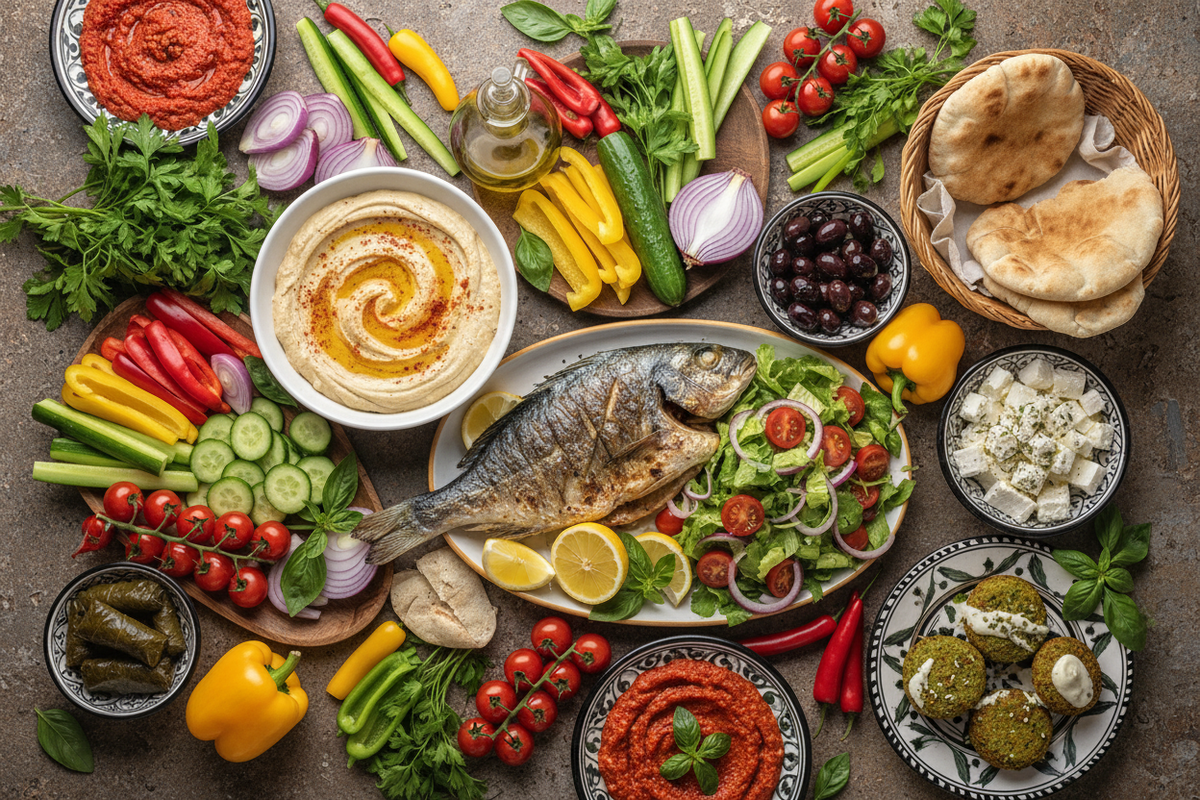
The pattern with the strongest evidence: Mediterranean-style eating
Harvard Health’s review of fertility and diet reached a similar, unglamorous conclusion: a healthy pattern (Mediterranean-style, folic acid, B12, omega-3s) beats a miracle food. Of all the dietary patterns studied, a Mediterranean-style diet has the most consistent research behind it — not just for heart health, but for reproductive outcomes too. A 2023 systematic scoping review looking at dozens of studies on preconception diet found that higher adherence to a Mediterranean pattern was more strongly and consistently linked to improved pregnancy rates than any other dietary factor studied. An earlier study of couples undergoing fertility treatment found that higher adherence to this pattern was associated with a meaningfully greater chance of pregnancy.
The pattern itself is simple:
- Vegetables, fruit, and legumes — the daily foundation
- Whole grains over refined carbohydrates
- Olive oil as the primary fat source
- Fish and poultry in moderation, red and processed meat kept low
- Minimal added sugar and ultra-processed snacks
What to cut back on, according to the same research
The same scoping review found that reducing trans fats, saturated fats, and discretionary foods like fast food and sugar-sweetened drinks was linked to better outcomes across several studies arguably as useful a lever as adding "superfoods" in.
The nutrients worth paying attention to — and the NHS vitamins and minerals overview / RCOG pregnancy vitamin-supplement leaflet if you want the UK public-health version
A few individual nutrients keep showing up across the research as particularly relevant:
- Folate and B vitamins — one well-cited study linked higher Mediterranean-pattern adherence to better folate and B6 status, which in turn correlated with pregnancy outcomes
- Antioxidants — diets rich in antioxidant-containing foods (berries, leafy greens, nuts) are consistently associated with reduced oxidative stress, a factor relevant to both egg and sperm quality
- Omega-3s — found in oily fish, and associated in prospective research with healthier developmental markers
Fertility and healthy diets
The link between diet and fertility isn't a fringe idea — some of the largest, longest-running nutrition research in the world has looked at it directly. Harvard's Nurses' Health Study II followed over 17,000 women and found that those who adopted a cluster of specific dietary and lifestyle habits had a substantially lower risk of ovulatory infertility than those who didn't a difference of roughly sixfold between women following five or more of these habits and those following none.
The habits that made the biggest difference in that research included:
- Swapping some animal protein for plant protein beans, nuts, and legumes in place of a portion of meat
- Choosing full-fat dairy over low-fat a counter-intuitive one that shows up repeatedly in ovulatory infertility research
- Favoring slow carbohydrates whole grains and vegetables over refined, high-glycemic carbs
- Getting enough iron particularly from plant sources and supplements rather than red meat alone
- Taking a multivitamin associated with lower ovulatory infertility risk across the same cohort
None of this is about extreme restriction if anything, the research points the other way. It's a small number of specific, swappable choices layered on top of the same overall pattern already linked to long-term health: more plants, better fats, steadier blood sugar, and less ultra-processed food.
The longevity link
This isn't just about the next few months, either. In 2024, a Harvard-led study followed over 25,000 women for up to 25 years and found that those who most closely followed a Mediterranean-style pattern had up to a 23% lower risk of dying from any cause over that period, with benefits showing up for both cancer and cardiovascular mortality specifically. Researchers linked part of this to measurable improvements in inflammation, insulin resistance, and blood fat levels — not just abstract "healthy eating," but changes that show up in bloodwork.
Earlier meta-analyses pooling data across many longevity studies found a similar pattern: consistently lower cancer incidence and cancer mortality among people with high adherence to this way of eating. And in older adults specifically, ongoing reviews of the evidence link sustained adherence to reduced cardiovascular events into later life.
The connecting thread across the fertility and longevity research is the same: chronic inflammation and oxidative stress accelerate cellular aging and are also linked to poorer egg and sperm quality. A diet that consistently lowers both isn't doing two separate jobs — it's doing one job that happens to matter at every life stage.
You don't need a strict meal plan. Research on adherence to these patterns suggests consistency matters more than perfection — most of the studied benefit comes from the overall pattern of what you eat most days, not from any single "perfect" meal.
Small, consistent shifts — more plants, more whole foods, less ultra-processed — do more for long-term health than any short-term overhaul. And for anyone in a preconception window, that consistency compounds: this is exactly the kind of daily foundation that a women’s preconception formula and a men’s preconception formula are designed to support alongside.
We follow the evidence, not the hype.
Thanks for reading — Jade & Yan, founders of
Sources
- Systematic scoping review of observational studies on preconception diet and female fertility. Human Reproduction Update, 2023. PMC
- Chavarro JE, Rich-Edwards JW, Rosner BA, Willett WC. "Diet and Lifestyle in the Prevention of Ovulatory Disorder Infertility." Obstetrics & Gynecology, 2007 (Nurses' Health Study II). Harvard School of Public Health summary
- Vujkovic M, et al. "The preconception Mediterranean dietary pattern in couples undergoing IVF/ICSI treatment increases the chance of pregnancy." Fertility and Sterility, 2010. PubMed
- Mediterranean diet and infertility: systematic review with meta-analysis of cohort studies. 2022. PubMed
- The Role of the Mediterranean Diet in Assisted Reproduction: A Literature Review. PMC
- Mediterranean diet adherence and all-cause mortality in women: 25-year cohort study. JAMA Network Open, 2024 (Brigham and Women's Hospital / Harvard Medical School). Harvard Gazette
- Mediterranean Diet in Older Adults: Cardiovascular Outcomes and Mortality — Systematic Review and Meta-Analysis. Nutrients, 2024. PubMed
If you're pairing food with targeted nutrients while TTC, see the Fertility line.
How the formulas sit on top of the plate
Food first. If you add a preconception formula, Her Fertility and Him Fertility are the two tubs — they do not replace vegetables, oily fish or a folic acid habit. Omega-3 still usually sits in a separate oil.
Read our complete guide: Male & female fertility: the complete UK guide


Leave a comment
All comments are moderated before being published.
This site is protected by hCaptcha and the hCaptcha Privacy Policy and Terms of Service apply.