

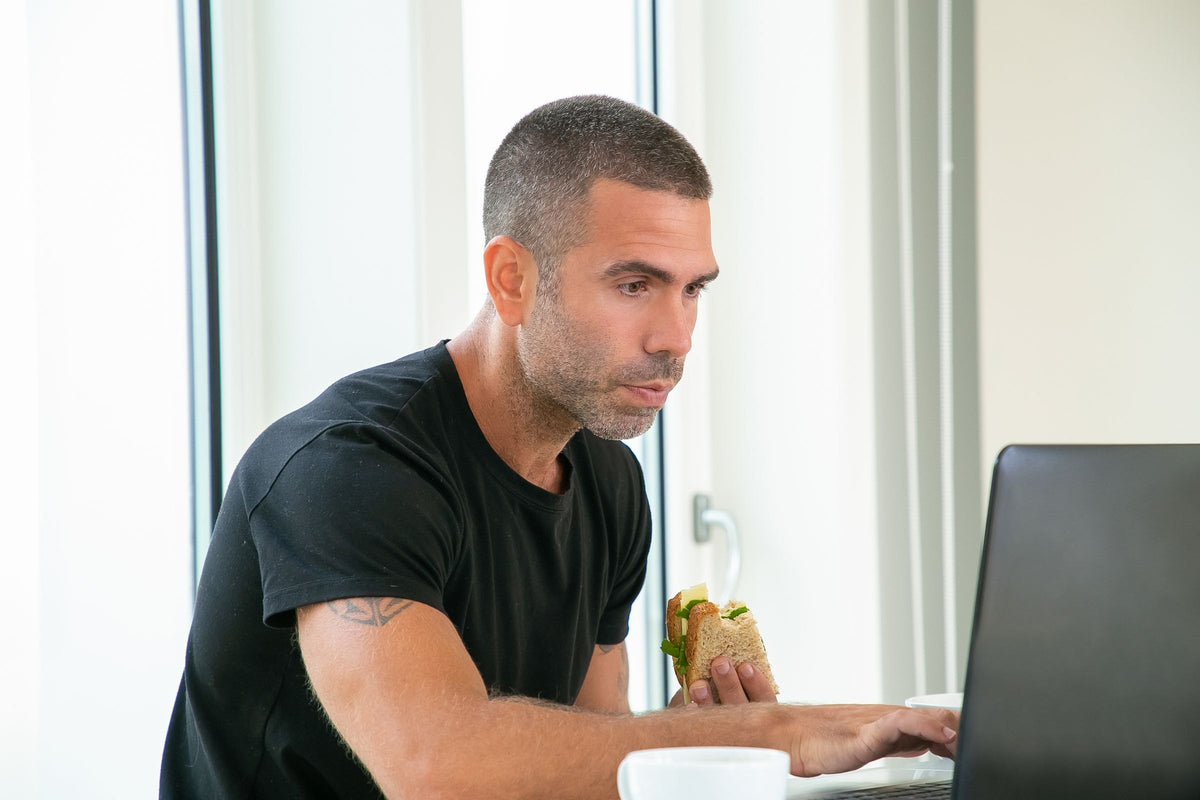
It’s half two. Lunch was fine, the morning went well, and now your eyelids feel heavy, the same email has been open for ten minutes and the vending machine is starting to look like a plan. Most men know the feeling. The good news is that a mid-afternoon dip is usually normal biology plus a few habits that make it worse, and those habits are easy to change.
The short answer: feeling tired after lunch is partly built into your body clock. Alertness naturally dips in the early to mid afternoon, even if you skip lunch. A large or very starchy meal, alcohol, too little sleep the night before, not drinking enough and sitting still for hours all make that dip deeper. Smaller, balanced meals, a short walk after eating, water and a decent night’s sleep usually help. If you’re tired most of the day, very thirsty or peeing more than usual, or you fall asleep without meaning to, see your GP.
This guide covers why the slump happens, what makes it worse, what helps without relying on caffeine, and the signs that it’s worth getting checked.
Why do I feel tired after lunch?
Your sleep drive doesn’t rise in a straight line through the day. Alongside the big push towards sleep at night, there’s a smaller rise in sleepiness in the early afternoon. Sleep researcher Timothy Monk describes this “post-lunch dip” as a real, biological effect that can happen even when people haven’t eaten and don’t know what time it is (Monk, Clinics in Sports Medicine, 2005). It’s one reason siestas exist in hotter countries.
So lunch isn’t the whole story. But the same review notes that the dip is made worse by a high-carbohydrate lunch. A big plate of pasta, a meal deal with crisps and a fizzy drink, or a pub lunch with a pint will all tend to make a natural dip feel like a cliff edge.
What makes the afternoon slump worse?
- Short or broken sleep. If you’re running on six hours, the afternoon is when it catches up with you. If you wake up tired too, our guide to why men wake up tired every morning covers the common causes, including sleep apnoea.
- One big meal instead of several smaller ones. The NHS suggests eating regular meals and healthy snacks every 3 to 4 hours rather than a large meal less often, as a way to keep your energy up through the day (NHS: Self-help tips to fight tiredness).
- Alcohol at lunch. Even one drink in the middle of the day adds to the natural dip. Save it for later, if at all.
- Not drinking enough. The NHS says that sometimes you feel tired simply because you’re mildly dehydrated. It suggests 6 to 8 glasses of fluid a day, with pale yellow pee as a rough guide (NHS: Water, drinks and hydration).
- Sitting still for hours. Desk, van or sofa, a long stretch without moving makes it much harder to shake off drowsiness.
- The caffeine cycle. Coffee at 3pm feels like the fix, but the NHS points out that caffeine’s effects can last up to 7 hours, so it can disturb that night’s sleep and leave you more tired the next afternoon.
- Stress. A tense morning uses up a lot of energy, and the afternoon is often when you feel the cost. Our guide to ashwagandha, stress and energy looks at what the research does and doesn’t show.
How do you stop feeling tired in the afternoon?
None of these is dramatic, but together they make a real difference for most men.
Change what’s on your lunch plate
Go for a moderate portion with some protein (chicken, fish, eggs, beans or lentils), plenty of vegetables or salad, and wholegrain carbs rather than a large pile of white bread, pasta or chips. Keep a piece of fruit, a handful of nuts or a yoghurt for mid-afternoon, so you’re not starving by four o’clock and reaching for sugar.
Walk after you eat
This is the simplest fix and one of the best supported. The NHS says even a single 15-minute walk can give you more energy. Research backs up getting up after meals too. A 2022 review of randomised trials found that breaking up long periods of sitting with short bouts of light walking lowered the rise in blood sugar and insulin after eating, compared with sitting still (Buffey et al., Sports Medicine, 2022). A lap of the block, taking the stairs or a walking phone call all count.
Drink water before more coffee
Have a large glass of water when the slump hits and give it ten minutes. If you do want caffeine, keep it to the morning or early afternoon so it doesn’t eat into your sleep.
Get daylight
Ten minutes outside at lunchtime, even on a grey day, is brighter than any office light. Once the clocks go back in late October and the evenings draw in, that midday daylight matters more than ever over winter.
Should you nap?
It depends on how you sleep at night. The NHS advises avoiding daytime naps if you’re trying to sleep better at night. If you sleep well but had a short night, a brief nap can help. In one study of young adults who had slept for only about 5 hours, a 10-minute afternoon nap improved alertness and performance straight away, while a 30-minute nap left people groggy at first (Brooks and Lack, Sleep, 2006). If you nap, keep it short and before mid-afternoon.
Protect tonight’s sleep
The best fix for tomorrow’s slump is tonight. Regular bed and wake times, less alcohol in the evening and putting your phone away an hour before bed will do more than any afternoon trick. Our complete UK guide to daily energy and vitality brings the sleep, food and stress basics together in one place.
When is tiredness after eating a sign of something else?
A dip in the afternoon that lifts by early evening is normal. Feeling wiped out every day, or tiredness that comes with other symptoms, is worth a GP appointment.
Type 2 diabetes is one cause to keep in mind, especially for men over 40. The NHS lists the most common symptoms as feeling very tired, peeing more than usual, feeling thirsty all the time and losing weight without trying, with blurred vision and slow-healing cuts as other signs. Not everyone gets symptoms, so it’s worth getting checked if you’re at higher risk, for example if you’re overweight, not very active or have a parent or sibling with it (NHS: Symptoms of type 2 diabetes). If you’re 40 to 74 and don’t have an existing condition, you can ask your GP surgery or a local pharmacy for a free NHS Health Check.
See a GP if:
- you’ve felt tired for a few weeks and don’t know why
- you’re very thirsty, peeing more than usual or losing weight without trying
- you snore loudly, someone has noticed you stop breathing at night, or you wake with headaches
- you fall asleep without meaning to, especially while driving
- tiredness comes with low mood, losing interest in things or feeling hopeless
If you ever feel yourself drifting off at the wheel, pull over somewhere safe and rest, and speak to your GP soon.
Where does a daily supplement fit?
Honestly, it comes after the basics. No capsule makes up for four hours’ sleep, a huge lunch and an afternoon in a chair. But if you’re already eating well and moving more and want a stimulant-free daily routine, Him Revive is a UK-made food supplement for adult men, taken as 4 capsules a day with food.
It contains no caffeine or stimulants. Per daily serving it includes folate as 5-MTHF (400 µg), which contributes to the reduction of tiredness and fatigue, zinc as citrate (15 mg), which contributes to normal cognitive function, and vitamin D3 (2500 IU), which contributes to normal muscle function. It also contains KSM-66® ashwagandha root (300 mg), rhodiola root extract (100 mg), Korean ginseng extract (200 mg) and saffron extract (20 mg). We suggest 2 capsules in the morning and 2 in the evening, so it sits alongside your day rather than acting as a quick pick-me-up. Results vary from person to person.
For the bigger picture of why energy can feel harder to come by as men get older, read why men’s energy and vitality decline after 30.
Frequently asked questions
Why do I feel tired after lunch?
Alertness naturally dips in the early to mid afternoon because of your body clock, even if you skip lunch. A large or very starchy meal, alcohol, short sleep the night before, not drinking enough and sitting still for long periods can all make the dip deeper.
Is it normal to feel sleepy after eating?
Yes, feeling a bit sleepy in the early afternoon is common and usually normal. It is worth seeing a GP if you feel tired most of the day for a few weeks, or if tiredness comes with being very thirsty, peeing more than usual or losing weight without trying.
How can I stop the afternoon slump without caffeine?
Eat a moderate lunch with protein, vegetables and wholegrain carbs, take a 10 to 15 minute walk after eating, drink a glass of water, get some daylight and keep to regular sleep times. The NHS suggests eating regular meals and healthy snacks every 3 to 4 hours rather than one large meal.
Can feeling tired after eating be a sign of diabetes?
It can be one sign. The NHS lists feeling very tired, peeing more than usual, feeling thirsty all the time and losing weight without trying as the most common symptoms of type 2 diabetes. Not everyone has symptoms, so speak to your GP if you are worried or at higher risk.
Is a nap after lunch a good idea?
It depends on your night-time sleep. The NHS advises avoiding daytime naps if you are trying to sleep better at night. If you sleep well but had a short night, a nap of about 10 to 20 minutes before mid-afternoon is less likely to leave you groggy than a longer one.
This article is general information for UK readers, not medical advice. Him Revive is a food supplement, not a medicine, and should not be used as a substitute for a varied, balanced diet and a healthy lifestyle. Talk to your GP or pharmacist before starting supplements, especially if you take medication, have diabetes or another health condition, or are under medical supervision. Individual results vary.



Leave a comment
All comments are moderated before being published.
This site is protected by hCaptcha and the hCaptcha Privacy Policy and Terms of Service apply.