

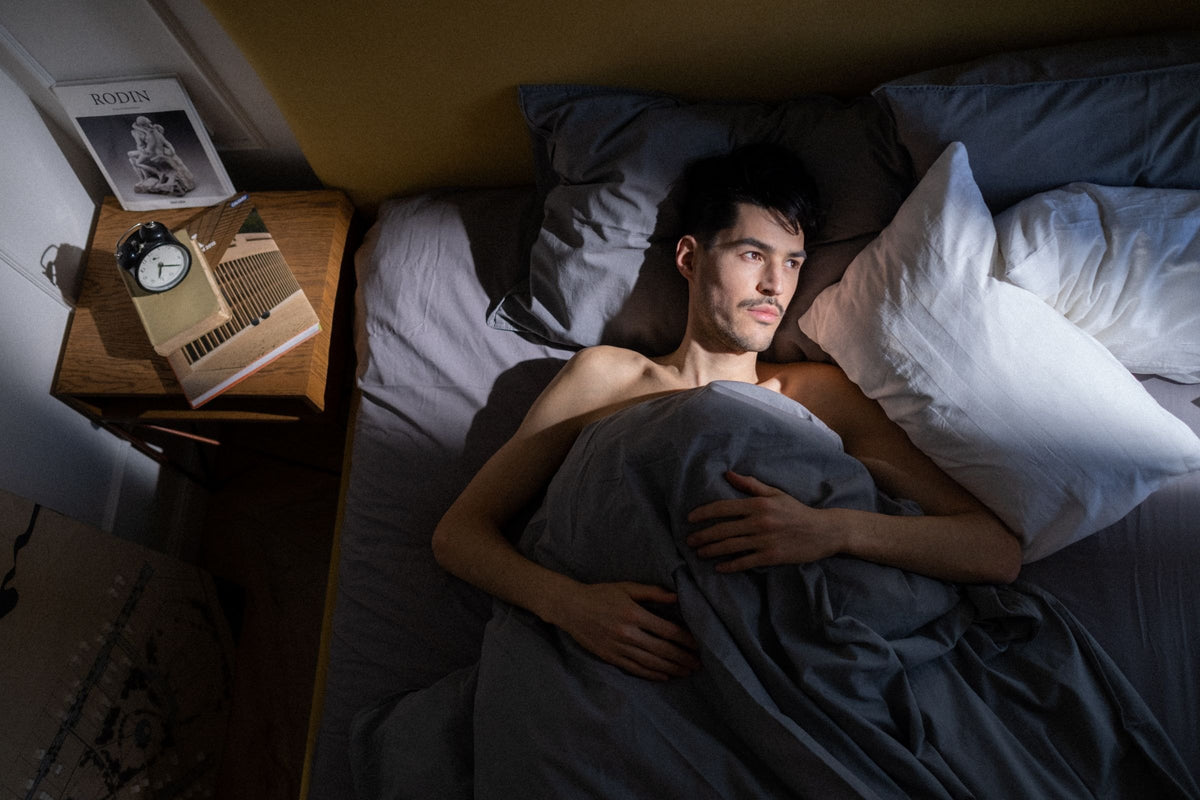
The alarm goes off, you’ve technically had seven or eight hours, and you still feel like you’ve been hit by a bus. If that’s most mornings rather than the odd one, it’s worth working out why. For a lot of men over 35, the answer isn’t one big thing but a few small ones stacking up: late drinks, a phone in bed, a stressful week, a darker season, and sometimes a medical cause that’s easy to miss.
The short answer: waking up tired usually means your sleep isn’t as good as its length suggests. The most common reasons are irregular sleep times, alcohol, caffeine or screens late in the evening, and stress or low mood. In men, two causes worth ruling out are sleep apnoea (especially if you snore loudly or someone has heard you gasp or stop breathing at night) and getting up to pee during the night. The NHS advises seeing a GP if you’ve felt tired for a few weeks and don’t know why, or if it’s affecting your daily life.
This guide covers the everyday causes, the medical ones to know about, what actually helps, and where a daily supplement does and doesn’t fit.
Why do I wake up tired even after 8 hours of sleep?
Hours in bed and good sleep aren’t the same thing. You can spend eight hours lying down and still get broken, shallow sleep if something keeps nudging you awake, even if you don’t remember waking. Alcohol, a late meal, a warm or bright bedroom, a racing mind, needing the loo or interrupted breathing can all do this.
A few minutes of grogginess straight after waking is normal. What isn’t normal is feeling unrefreshed most days, needing several coffees to function, or nodding off in the afternoon or in front of the TV.
The NHS lists the most common causes of tiredness as not getting enough sleep or finding it hard to get to sleep, an unhealthy diet and lack of exercise, and stress, depression and dealing with life challenges (NHS: Tiredness and fatigue). Most of the time, that’s where to start.
What everyday habits make you wake up tired?
- Irregular sleep times. Late nights at the weekend and early starts in the week shift your body clock around. The NHS suggests sticking to the same sleep times and aiming for 6 to 9 hours.
- Alcohol. A drink or two can help you nod off, but for many people it makes sleep lighter and more broken later in the night, and the NHS lists it as a factor in sleep apnoea. The NHS low-risk guideline is no more than 14 units a week, spread over three or more days, with several drink-free days (NHS: The risks of drinking too much).
- Caffeine, food and exercise late on. The NHS advises not eating, having caffeine or exercising in the couple of hours before bed. If you rely on an afternoon energy drink, that’s often part of the problem.
- Screens in bed. The NHS suggests putting phones and screens away for the hour before sleep. Scrolling keeps your brain switched on when it should be winding down.
- Your bedroom. Too bright, too noisy or too warm all make sleep lighter. Blackout blinds and a cooler room are cheap fixes.
- Stress. Work pressure, money worries or a new baby can keep your body on alert at night. If your mind races at 3am, our guide to ashwagandha for stress and energy covers what the research does and doesn’t show.
Could it be sleep apnoea?
Obstructive sleep apnoea is when your airway narrows during sleep, so your breathing repeatedly stops and starts. Each pause briefly wakes your brain, which is why you can sleep all night and still feel exhausted. Many people with it have no idea, and it’s often a partner who notices first.
The NHS lists these signs (NHS: Sleep apnoea):
- breathing that stops and starts while you sleep
- gasping, snorting or choking noises
- loud snoring and waking up a lot
- feeling very tired during the day, poor concentration and mood swings
- a headache when you wake up
It’s been linked to obesity, having a large neck, getting older, alcohol, smoking, sleeping on your back and a family history of sleep apnoea. It matters because, left alone, it’s linked to high blood pressure, type 2 diabetes, heart disease, stroke and accidents caused by tiredness. The good news is that it’s very manageable. Losing weight, cutting back on alcohol and sleeping on your side can help, and if you need a CPAP machine it’s free on the NHS.
If you drive, this one is important. Under GOV.UK rules, you must tell the DVLA if you have confirmed moderate or severe obstructive sleep apnoea with excessive sleepiness, and you must not drive until your symptoms are under control (GOV.UK: Excessive sleepiness and driving). If you’ve ever felt yourself drifting off at the wheel, speak to your GP soon.
Waking up to pee at night
Getting up once or twice a night breaks your sleep into chunks, and it becomes more common for men with age. The NHS lists needing to pee more often, including getting up during the night, as one of the symptoms of an enlarged prostate, along with a weak or stop-start flow and feeling that your bladder hasn’t fully emptied (NHS: Enlarged prostate). Peeing more often at night together with feeling very thirsty and tired can also be a sign of diabetes.
Cutting back on drinks, especially alcohol and caffeine, in the evening can help. But if it’s a regular thing, see your GP. Try not to be embarrassed; GPs talk about this every day.
Medical reasons men feel tired all the time
If your sleep habits are decent and you still wake up exhausted, the NHS suggests a GP may check for conditions such as these:
- Iron deficiency anaemia: lack of energy, palpitations, shortness of breath and pale skin.
- Diabetes: very tired, very thirsty, peeing more often (especially at night) and weight loss.
- Thyroid problems: an overactive or underactive thyroid can both affect energy.
- Depression and anxiety: waking early and not being able to get back to sleep, or feeling flat on waking, are common signs.
- Medicines: some prescription and over-the-counter medicines can cause drowsiness. Your pharmacist can check yours.
Low vitamin D is another one to have on your radar from October onwards. Between October and March the UK sun isn’t strong enough for your skin to make vitamin D, so the NHS says everyone should consider a daily 10 microgram supplement during autumn and winter (NHS: Vitamin D).
A simple set of blood tests can rule a lot of these out. If you’re also noticing lower drive, poorer recovery from training or changes in mood, mention those too, since they help your GP see the full picture. Our guide on why men’s energy declines after 30 goes into the bigger lifestyle picture.
How to stop waking up tired: what actually helps
Start with the basics for two to three weeks before judging whether they work. Small changes add up.
- Fix your wake-up time, seven days a week, even after a late night. It’s the single most useful anchor for your body clock.
- Get daylight early. Getting outside soon after you wake, even on a grey day, helps set your body clock for the day ahead.
- Set a caffeine cut-off in the early afternoon, and keep the last couple of hours before bed free of caffeine, big meals and hard exercise.
- Have drink-free nights in the week and notice how you feel the next morning.
- Move every day. Regular exercise helps sleep, energy and weight, which in turn helps with snoring and sleep apnoea.
- Park the phone outside the bedroom for the last hour, and keep the room dark, quiet and cool.
- Ask your partner whether you snore, gasp or stop breathing. It’s the quickest sleep test there is.
If you’re struggling to fall or stay asleep for weeks at a time, see your GP. The NHS says you may be offered cognitive behavioural therapy (CBT), face to face or through an online programme, to change the thoughts and habits that keep you awake (NHS: Insomnia). Avoid sleeping pills unless a doctor recommends them, as the NHS warns they can make sleep apnoea worse. Our post on why sleep matters for your hormones explains more about what happens overnight.
Can a supplement help with morning tiredness?
A supplement won’t fix sleep apnoea, a prostate problem or a 1am bedtime, and anything that promises instant energy is usually just caffeine. What it can do is help you cover the nutritional basics consistently while you sort out the habits above.
Yan, our resident science nerd, built Him Revive as a stimulant-free daily formula, with no caffeine, so it won’t keep you awake at night. It contains folate as active 5-MTHF, which contributes to the reduction of tiredness and fatigue, vitamin D3, which contributes to normal muscle and immune function, and zinc, which contributes to normal cognitive function. Alongside those it includes KSM-66 ashwagandha, rhodiola and saffron, botanicals that are being studied for stress and sleep.
To be honest about the evidence: a 2021 review of five trials found that ashwagandha extract had a small but significant effect on overall sleep and improved mental alertness on waking, with bigger effects in people with insomnia, at doses of 600 mg a day or more and over at least eight weeks (Cheah et al., PLoS One, 2021). Him Revive contains 300 mg of KSM-66, chosen for everyday stress support rather than as a sleep aid, and the review authors noted that more long-term safety data is needed. Think of it as one supportive part of your routine, not the fix.
Take it with breakfast as part of your morning routine. If you take regular medication, have a thyroid condition or are under a doctor’s care, check with your GP or pharmacist first. You can see the full Revive range, including the Him & Her Revive Bundle, on our vitality support page.
When to see a GP about waking up tired
The NHS advises seeing a GP if:
- you’ve been feeling tired for a few weeks and you’re not sure why
- your tiredness affects your daily life
- you feel tired and have other symptoms, such as weight loss or mood changes
- you’ve been told you make gasping, snorting or choking noises when you’re asleep
If someone has seen you stop breathing at night, it helps to bring them with you to the appointment. And if tiredness ever affects your driving, pull over somewhere safe and don’t carry on until you’ve spoken to your GP.
Waking up tired: frequently asked questions
Why do I wake up tired every morning?
Usually because your sleep is broken or lighter than it should be, even if it looks long enough. Common reasons are irregular sleep times, alcohol, late caffeine or screens, and stress. Sleep apnoea and getting up to pee at night are two causes men should rule out with a GP.
Is it normal to wake up tired after 8 hours of sleep?
A few minutes of grogginess is normal. Feeling unrefreshed most mornings is not. The NHS advises seeing a GP if you've felt tired for a few weeks without knowing why, or if it affects your daily life.
How do I know if I have sleep apnoea?
Signs include loud snoring, gasping or choking noises, breathing that stops and starts, waking a lot, morning headaches and daytime tiredness. A partner often notices first. Your GP can refer you for a sleep test, which you can usually do at home.
Can low vitamin D make you tired?
Low vitamin D is common in the UK in autumn and winter, when the sun isn't strong enough for your skin to make it. The NHS says everyone should consider a daily 10 microgram vitamin D supplement from October to March. If you feel tired all the time, ask your GP about blood tests rather than guessing.
What's the best supplement for waking up tired?
No supplement fixes poor sleep or a medical cause. Some nutrients support normal energy: folate, iron and vitamins B6 and B12 contribute to the reduction of tiredness and fatigue. Choose a caffeine-free formula, take it in the morning, and work on sleep habits alongside it.
This article is general information for UK readers, not medical advice. Him Revive is a food supplement, not a medicine, and is not intended to diagnose, treat or prevent any condition. It should not be used as a substitute for a varied, balanced diet and a healthy lifestyle. Talk to your GP or pharmacist before starting supplements, especially if you take medication or have a health condition. Individual results vary.
Read our complete guide: Daily energy & vitality: the complete UK guide for men and women



Leave a comment
All comments are moderated before being published.
This site is protected by hCaptcha and the hCaptcha Privacy Policy and Terms of Service apply.