


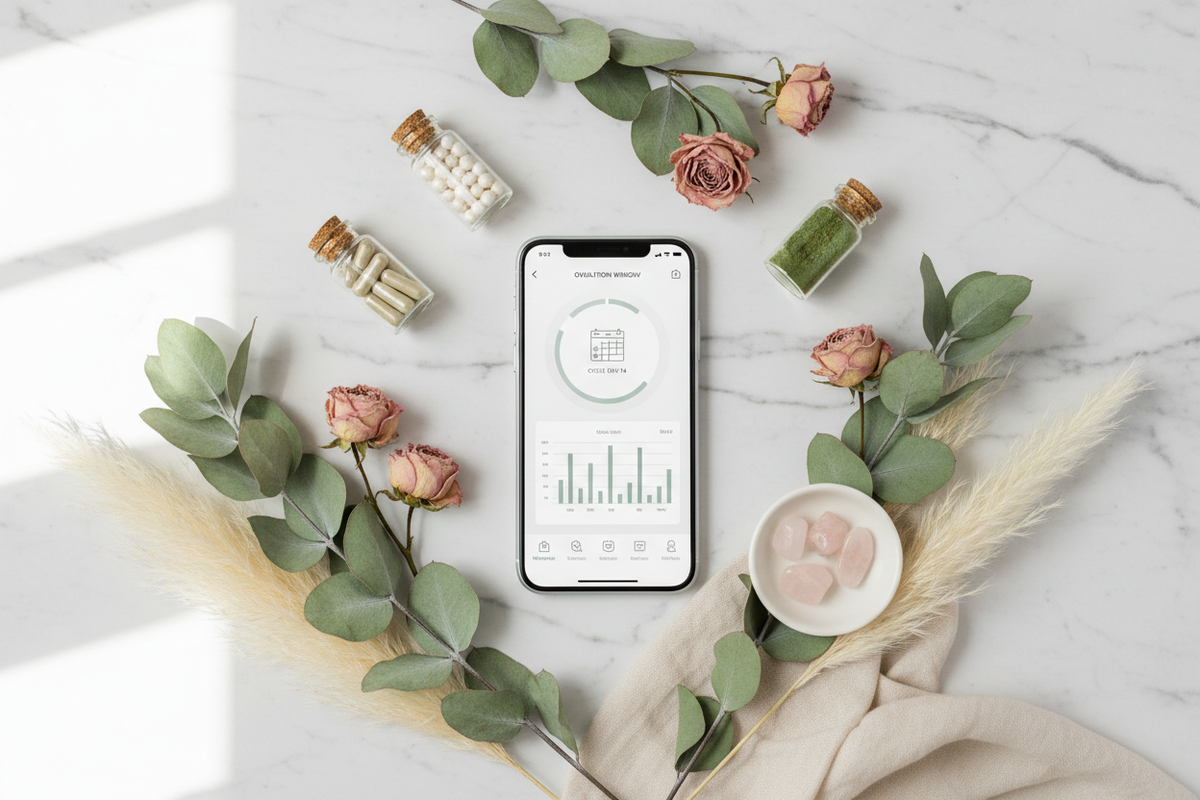
Can Hormone-Tracking Apps Really Read Your Hormones?
FemTech funding hasn't slowed down. This month alone, Abu Dhabi-based Ovasave raised $1.2 million to expand at-home hormone testing and fertility tracking, while Oura rolled out its first AI model built specifically for women's health. The pitch is tempting: strap on a ring or open an app, and get a real-time read on your hormones. But is that actually what's happening?
What wearables are genuinely good at
The evidence here is more solid than the skeptics give it credit for. A 2026 systematic review and meta-analysis of wearable fertility trackers found a pooled accuracy of 0.88 for detecting the fertile window, with sensitivity of 0.79 and specificity of 0.80. Oura's Cycle Insights feature, which combines skin temperature, heart rate variability, and sleep data, reports ovulation detection accuracy above 96% in its own data. These devices are picking up real physiological signals — they're just doing it indirectly.
The gap between "tracking" and "measuring"
Here's the part that gets lost in the marketing: most wearables don't measure hormones at all. They track proxies — temperature shifts, heart rate variability, sleep patterns — and infer where you likely are in your cycle from those patterns. That's genuinely useful for cycle awareness, but it's not the same as knowing your actual estrogen, progesterone, or LH levels at a given moment.
This distinction matters because a broader review of the FemTech space found that many fertility-tracking technologies reach the market with limited evidence of analytical validity or clinical benefit — and a review of 23 commercially available fertility devices found a real scarcity of independent research backing many of their specific claims. Good sensor data doesn't automatically mean a good hormone read.
How to actually use these tools
- Wearables: great for awareness, not diagnosis. Use them to understand your own patterns over time, not as a substitute for a clinical answer.
- Check what's actually being measured. Temperature and HRV-based predictions are indirect; a blood, saliva, or urine hormone test is direct.
- Look for published validation. Ask whether a device's accuracy claims come from independent, peer-reviewed studies or from the company's own data.
- Combine data with a real conversation. If you're actively trying to conceive or have irregular cycles, app data is a useful starting point for a GP or fertility specialist — not a replacement for one.
The FemTech boom is a genuinely good thing for hormone health awareness — it's putting language and data in people's hands that used to require a clinic visit. Just be clear-eyed about what's a measurement and what's an educated guess.
How this sits with TTC nutrition
Apps are not blood tests. If you are TTC, folic acid still applies, and optional nutrition is Her Fertility — not something an app “unlocks”.
Read our complete guide: Male & female fertility: the complete UK guide



Leave a comment
All comments are moderated before being published.
This site is protected by hCaptcha and the hCaptcha Privacy Policy and Terms of Service apply.