

Your Gut Microbiome & Fertility: What the Science Now Tells Us
Emerging research is establishing a clear mechanistic link between gut microbiome health, hormonal regulation, and reproductive outcomes — in both men and women. Here is what the evidence shows, and what you can do about it. For a readable public overlay on food and conception — not a gut protocol — see Harvard Health on fertility and diet.
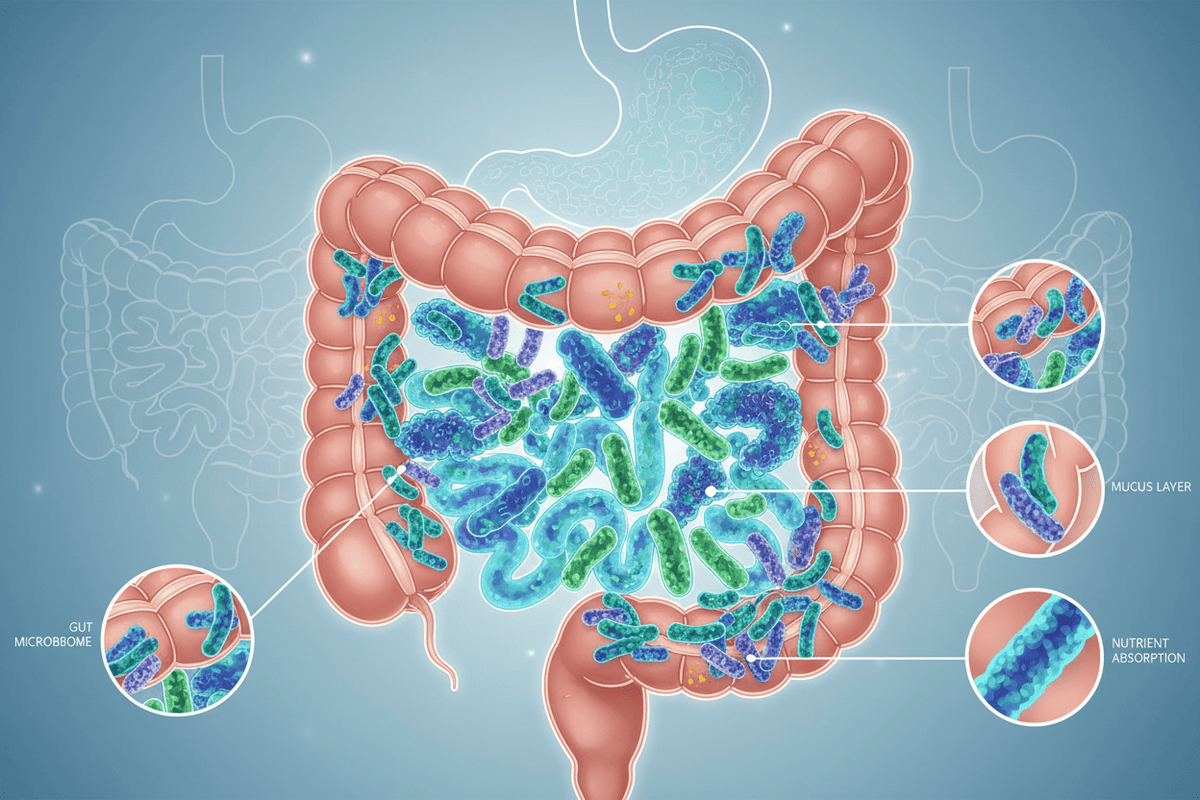
The gut microbiome the community of trillions of bacteria, fungi, and other microorganisms residing in the gastrointestinal tract is no longer considered a passive digestive accessory. It functions as an active regulatory system, influencing inflammation, immune response, nutrient bioavailability, mood, and, critically, hormonal signalling.
For those trying to conceive, the implications are significant. A growing body of research including studies published in 2025 and 2026 is establishing direct mechanistic links between microbiome composition and reproductive outcomes. Understanding these connections provides one of the most actionable levers available for fertility optimisation.
Yan comes from a science background, and the science of the gut microbiome has informed our approach to formulation from the outset. What follows reflects both the published evidence and our direct engagement with this field during the development of the range.
What Is the Gut Microbiome — and Why Does It Matter for Fertility?
A diverse and balanced microbiome functions as a distributed regulatory network across multiple physiological systems. When microbial composition is disrupted a state referred to as dysbiosis downstream effects can propagate throughout the body, including into the reproductive system.
Dysbiosis is associated with increased intestinal permeability, elevated systemic inflammation, impaired nutrient absorption, and disrupted hormonal metabolism all of which have documented relevance to fertility in both sexes.
How the Gut Regulates Oestrogen: The Estrobolome
Among the most clinically significant recent discoveries in reproductive medicine is the concept of the estrobolome — the specific consortium of gut bacteria responsible for metabolising and regulating circulating oestrogen levels.
Hepatic Processing
The liver conjugates oestrogen for excretion and routes it into the gastrointestinal tract via bile.
Bacterial Enzyme Activity
Certain gut bacteria produce β-glucuronidase, an enzyme that deconjugates oestrogen — converting it back to its active form within the intestinal lumen.
Reabsorption & Systemic Circulation
Reactivated oestrogen is reabsorbed through the intestinal wall and re-enters systemic circulation, where it exerts its physiological effects.
Dysbiosis → Imbalance
When the microbiome is disrupted, β-glucuronidase activity becomes dysregulated resulting in either excessive oestrogen recirculation or insufficient reabsorption. Both states carry reproductive consequences.
This oestrogen imbalance driven by gut dysbiosis rather than ovarian dysfunction has been directly linked to several reproductive conditions:
Endometriosis, oestrogen-dominant PMS, heavy or painful periods, impaired implantation
Irregular or anovulatory cycles, poor follicular development, suboptimal endometrial lining
PCOS — associated with altered microbiome composition and insulin dysregulation via gut pathways
A healthy microbiome is part of general hormone and digestive health. We will not claim it protects ovarian reserve or egg quality
The Male Gut–Fertility Axis: The Testobolome
The gut–hormone connection is not exclusive to women. An analogous system increasingly referred to as the testobolome governs the relationship between the male microbiome and androgen metabolism.
Oestrogen Regulation via β-Glucuronidase
Gut bacteria modulate circulating oestrogen through enzymatic deconjugation, directly influencing ovulation, cycle regularity, implantation, and conditions including PCOS and endometriosis.
Testosterone Support & Inflammatory Modulation
A balanced microbiome supports healthy testosterone production and suppresses chronic low-grade inflammation a documented driver of reduced sperm count, motility, and morphology. Gut dysbiosis in men is associated with measurably poorer sperm parameters.
When both partners prioritise gut microbiome health, the combined effect on fertility potential is greater than either acting alone. Shared dietary and lifestyle practices that support the microbiome represent one of the most evidence-aligned couple-level interventions available.
Signs That Gut Health May Be a Factor in Your Fertility Journey
- Persistent bloating, excess gas, or irregular bowel habits not explained by other causes
- Hormonal symptoms that feel disproportionate heavy periods, severe PMS, or hormonal acne
- Unexplained fatigue, mood instability, or cognitive fog
- Persistent sugar cravings or reliance on ultra-processed foods
- History of repeated or prolonged antibiotic use
- Chronic psychological stress a well-documented driver of microbiome disruption
- Limited progress despite other positive lifestyle changes
Practical Steps to Support the Gut–Hormone–Fertility Axis
Prebiotic Foods — Feeding Beneficial Bacteria
Prebiotics are non-digestible dietary fibres that selectively feed beneficial bacterial species. Consistent dietary inclusion has been shown to improve microbiome diversity and reduce dysbiosis markers.
Fermented Foods — Introducing Live Cultures
Fermented foods contain live bacterial cultures that can transiently colonise the gut, supporting microbial diversity and reducing inflammatory markers. Introduce gradually if gut sensitivity is present.
Dietary Diversity — The 30 Plants Per Week Principle
Research from the American Gut Project found that individuals consuming 30 or more different plant species per week had significantly more diverse microbiomes than those consuming fewer than 10. Diversity of input drives diversity of bacterial population the most reliable marker of a resilient microbiome.
Lifestyle Foundations — Stress, Sleep & Movement
Chronic psychological stress measurably alters gut permeability and microbial composition via the gut–brain axis. Poor sleep further compounds dysbiosis through circadian disruption of the microbiome. Even 10–15 minutes of daily breathwork, walking, or structured relaxation produces measurable stress hormone reduction relevant to gut health.
Adequate hydration and regular movement support intestinal motility and microbial balance. Reducing ultra-processed food and added sugar intake removes a primary substrate for inflammatory bacterial species.
How Targeted Supplementation Complements Gut Health
Dietary and lifestyle change provides the foundation. Targeted supplementation can support the same underlying mechanisms particularly where dietary gaps, oxidative stress, or inflammation are present.
The Specialist preconception formulas incorporate high-potency CoQ10 and antioxidant compounds specifically selected to reduce oxidative stress and systemic inflammation two pathways through which gut dysbiosis degrades reproductive health. Women’s and men’s vitality formulas provide complementary support for energy metabolism and hormonal balance as gut foundations are rebuilt.
Supplementation is not a substitute for dietary and microbiome health but used alongside it, the combined effect is meaningfully greater than either approach in isolation.
How the formulas sit beside gut work
Microbiome care is diet, fibre, and clinical advice — not a fertility capsule. If you are also in a preconception window, Her Fertility and Him Fertility cover the nutrient lines this journal already explains (folate, zinc, selenium, CoQ10). They are not probiotics and not a treatment for IBS or endometriosis-related gut symptoms.
Read our complete guide: Male & female fertility: the complete UK guide

Leave a comment
All comments are moderated before being published.
This site is protected by hCaptcha and the hCaptcha Privacy Policy and Terms of Service apply.