


Preconception Wellness · Evidence-Based
Getting Pregnant After 30 —
What the Evidence Actually Says
Fertility after 30 is a journey that responds beautifully to preparation. Here’s how to give your body the best possible foundation before you begin trying to conceive.
If you’re planning to start or grow your family in your 30s, you’re in good company. Many women conceive successfully throughout their 30s and beyond — and one of the most empowering things you can do is begin preparing your body early. The NHS recommends beginning preconception care at least 2–3 months before trying to conceive, and there’s compelling science behind that advice.
This article brings together practical, evidence-backed steps to support your reproductive wellness. As always, consult your GP or a qualified healthcare professional for personalised guidance.
Understanding Your BiologyWhat changes after 30?
From around age 30, there’s a gradual reduction in ovarian reserve — the number and quality of eggs available. For many women this accelerates in the mid-to-late 30s, but lifestyle, nutrition, and overall health can all influence the environment in which eggs mature.
“The egg selected for ovulation undergoes its final maturation over 90–120 days. What you do in those months matters.”
This is why the concept of a “preconception window” is so important — not to create anxiety, but to give you a meaningful opportunity to nourish your body at exactly the right time.
Lifestyle FoundationsSix habits that support fertility
Eat nutrient-densely
A Mediterranean-style diet — rich in whole grains, healthy fats, oily fish, and antioxidant-packed vegetables — is consistently associated with positive reproductive outcomes.
Maintain a healthy weight
A BMI in the 18.5–24.9 range helps support regular ovulation and hormonal balance. Avoid extreme diets in either direction.
Move your body
Brisk walking, yoga, or strength training 3–4 times per week supports circulation and wellbeing. Excessive high-intensity exercise may disrupt cycles in some women.
Prioritise sleep
Aim for 7–9 hours nightly. Quality sleep directly supports the hormonal rhythms that regulate your cycle.
Reduce harmful substances
Stop smoking, limit alcohol, and keep caffeine below 200 mg daily. Minimise exposure to endocrine-disrupting chemicals where possible.
Track your cycle
Use ovulation predictor kits or apps to identify your fertile window. Regular intercourse every 2–3 days around ovulation meaningfully increases the chances of conception.
Your preconception appointment
Booking a preconception check with your GP is one of the most valuable things you can do. They may recommend blood tests for thyroid function, vitamin D, and iron; screening for underlying conditions; a medication review; and vaccination updates. If you’re over 35, seek advice sooner rather than later — guidance is to speak with a specialist if conception hasn’t occurred within 6 months.
The 3-Month WindowWhy timing your preparation matters
days
Egg maturation cycle. The egg released at ovulation is maturing for around 90–120 days beforehand. Supporting your body during this window with good nutrition and key micronutrients may help optimise the conditions in which those eggs develop.
µg
Folic acid, daily. The NHS specifically recommends 400 micrograms of folic acid every day before conception and throughout the first 12 weeks of pregnancy, to help protect against neural tube defects.
of you
Partners benefit too. Sperm development also takes around 2–3 months. Encouraging your partner to make positive changes at the same time amplifies your combined chances of a healthy conception.
CoQ10 and egg quality: what the research shows
Of all the nutrients studied in reproductive medicine in recent years, Coenzyme Q10 — CoQ10 — has attracted some of the most compelling attention, particularly for women over 30 and those with low AMH (Anti-Müllerian hormone), a key marker of ovarian reserve.
Here’s the biology: egg cells require more energy to mature than almost any other cell in the body. That energy is produced by the mitochondria — and CoQ10 is central to how mitochondria function. As women age, natural CoQ10 levels decline, mitochondrial efficiency drops, and egg quality can suffer as a result. Supplementing with CoQ10 is thought to help restore some of that cellular energy production during the critical months of egg maturation.
What the studies actually found
Frontiers in Cell & Developmental Biology, 2025A major review published in 2025 concluded that CoQ10 supplementation can enhance ovarian function and improve embryo quality, with the strongest benefits seen in women with diminished ovarian reserve — precisely the group that tends to have lower AMH. The researchers noted CoQ10’s dual role: boosting mitochondrial energy production in maturing eggs, and acting as an antioxidant to protect egg cells from oxidative damage.
Randomised Controlled Trial — PMCA randomised controlled trial in women with low AMH (below 1.2 ng/ml) and low antral follicle count found that CoQ10 pretreatment led to improved ovarian response and better embryo quality compared to controls — meaningful findings for women who have been told their ovarian reserve is low.
Systematic Review & Meta-Analysis, 2024A 2024 systematic review and meta-analysis of six randomised controlled trials — involving over 1,500 women with diminished ovarian reserve undergoing IVF — found that CoQ10 pretreatment was linked to higher fertilisation rates and more high-quality embryos retrieved.
Important: research in this area is ongoing and results vary. CoQ10 does not create new eggs or reverse ovarian ageing — but it may support the quality of the eggs you have. Always discuss your individual situation with your GP or a fertility specialist.
If you’ve had an AMH test that came back lower than expected, it’s natural to feel worried — but low AMH is not the same as zero chance of conception. It’s a marker of quantity, not necessarily quality. Supporting egg quality through nutrition, lifestyle, and targeted supplementation during the preconception window is where many women choose to focus their energy, and the evidence behind CoQ10 specifically makes it one of the more well-researched options available.
“Low AMH tells you about quantity — not quality. The two are not the same thing, and quality is something you can actively work to support.”
Preconception support for both of you
Conception is a shared journey — and the science backs that up. Sperm quality, motility, and DNA integrity are all influenced by lifestyle and nutrition in the months before trying to conceive. That’s why we created a formula for him too, so you can prepare together.
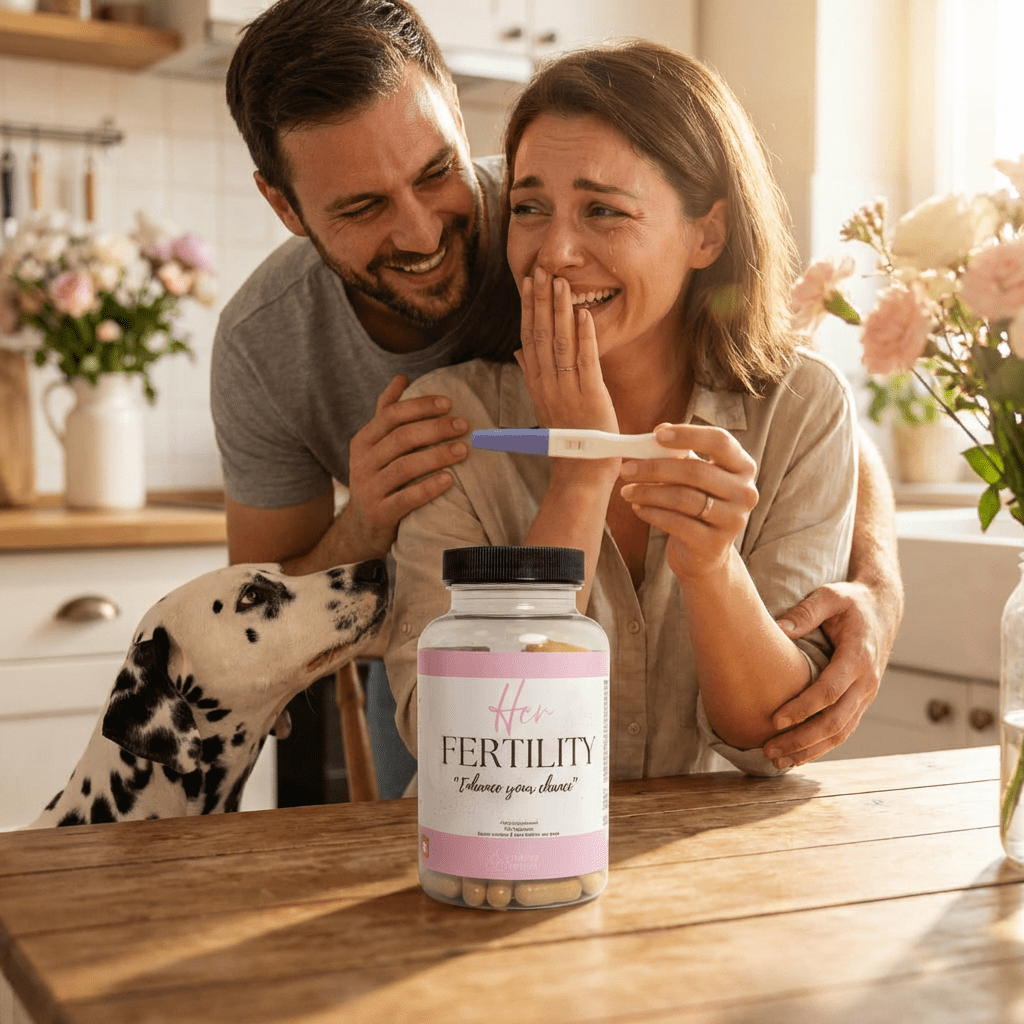
For her — the full preconception formula
A comprehensive daily blend formulated for women preparing to conceive, with clinically relevant dosages in vegetarian capsules. Take 4 capsules daily with food for at least 3 months before trying.
For him — male preconception support
Designed to support sperm health, motility, and overall reproductive wellness during the 3-month preconception window. Because a healthy conception starts with both partners at their best.
Shop Her Fertility, Him Fertility, or our couples bundle — free UK delivery on all orders.
Your journey is uniquely yours
Improving your chances of conceiving after 30 isn’t about doing everything perfectly — it’s about consistent, loving preparation. Nourishing your body, reducing modifiable risks, understanding your cycle, and seeking professional guidance all contribute to the best possible foundation.
If you have concerns, or have been trying without success, speak with your GP or a fertility specialist promptly. You don’t need to navigate this alone.
Thank you so much for reading — we hope this helps you feel informed, supported, and ready for the journey ahead. Wishing you all the love and luck in the world.
Jade & Yan, VitalityRevival

Leave a comment
All comments are moderated before being published.
This site is protected by hCaptcha and the hCaptcha Privacy Policy and Terms of Service apply.