


The Clinical Case for Exercise During Conception
A review of the evidence linking moderate physical activity to improved fertility outcomes — and a practical framework for both partners trying to conceive.
The relationship between physical activity and reproductive function is well-established in the clinical literature. Moderate, consistent exercise positively modulates hormonal signalling, reduces systemic inflammation, and supports metabolic function all of which are directly relevant to fertility in both sexes. What matters, however, is precision: the type, intensity, and volume of exercise determines whether movement aids or impedes conception.
Moderate exercise — approximately 150 minutes per week — is consistently associated with improved fertility markers in both male and female subjects, while vigorous training exceeding 4–5 hours per week has been linked to ovulatory disruption and reduced sperm quality. NHS vitamins and minerals guidance still sits underneath any training plan if you could become pregnant: folic acid and vitamin D are not optional extras you skip because you ran a 10k.
How Exercise Affects Reproductive Function
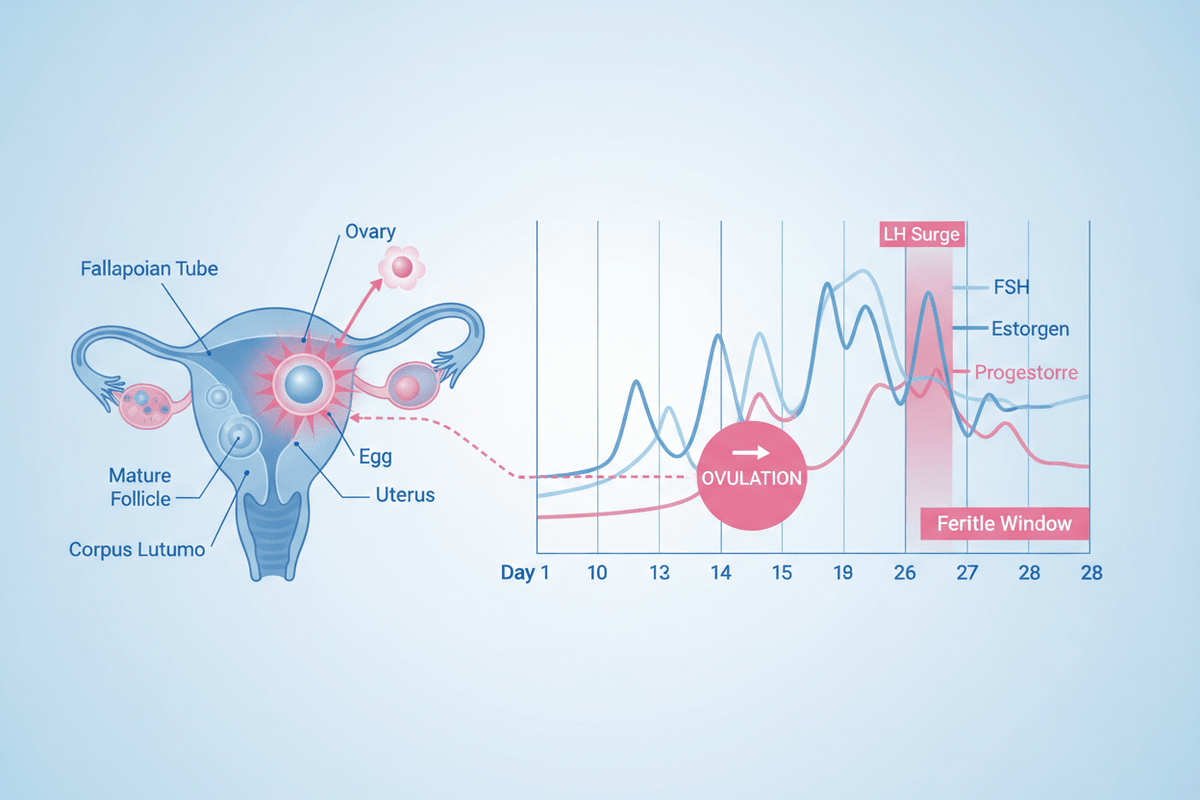
For women, moderate aerobic activity supports the hypothalamic-pituitary-ovarian axis, helping regulate the hormonal cascade required for regular ovulation. It improves insulin sensitivity critical in conditions such as PCOS and reduces cortisol, a stress hormone with a documented suppressive effect on reproductive hormones. That is lifestyle context for ovulation and insulin, not a claim that exercise improves egg quality or IVF success. Food, sleep and clinic care still lead. A food supplement is not a treatment.
For men, resistance and moderate aerobic training increases serum testosterone and has been shown to improve sperm count, motility, and morphology within 8–12 weeks of consistent activity. Sedentary men who adopt a structured 3–5 session weekly programme commonly see measurable sperm parameter improvements within a single spermatogenic cycle.
Exercise Modalities by Evidence Strength
Brisk Walking & Low-Intensity Cardio
Highly accessible and effective. Improves pelvic blood flow, supports cycle regularity, and elevates mood without imposing physiological stress. Target 30–45 minutes daily for both partners.
Strong evidence — both partnersYoga & Fertility-Focused Stretching
Reduces cortisol and supports pelvic circulation. Specific postures child's pose, supine bound angle, legs-up-the-wall promote parasympathetic recovery. RCT data supports improvements in both sperm parameters and emotional wellbeing in women undergoing TTC.
Moderate–strong evidenceResistance & Pilates-Based Training
Develops core and pelvic floor integrity clinically relevant for pregnancy preparation. For men, resistance training is among the strongest modalities for improving testosterone and sperm morphology. Recommended 2–3 sessions per week at moderate load.
Strong evidence — male fertilitySwimming
Delivers cardiovascular benefit without joint stress or thermogenic risk. Appropriate for both partners at any stage of the TTC cycle, including during fertility treatment where impact must be minimised.
Recommended — low risk profilePhase-Matched Moderate Cardio
Energy availability and hormonal milieu shift across the menstrual cycle. Lighter intensity cardio is better matched to the luteal phase; moderate cardio can be increased in the follicular phase when oestrogen and energy levels are elevated.
Cycle-syncing approachWhen Exercise May Impair Fertility
Exercise volume and intensity thresholds matter considerably. The following scenarios carry clinical evidence of potential reproductive harm and should be managed proactively.
- Vigorous training exceeding 4–5 hours/week in women — associated with anovulation and elevated stress hormones
- Overtraining combined with low energy availability — disrupts the HPO axis and may suppress LH pulsatility
- Scrotal heat exposure: hot yoga, saunas, prolonged hot baths — directly inhibits spermatogenesis in men
- Prolonged or intense cycling for men — sustained perineal pressure and scrotal heat impair sperm output
- High-impact or contact sports during IVF stimulation — ovarian enlargement increases risk of torsion
How the fertility formulas fit
Training load, energy availability and a GP timeline matter more than a tub. Nutrition in the same 90 days can still be Her Fertility (5-MTHF 400 µg, CoQ10 300 mg, NAC 400 mg, zinc 20 mg) and Him Fertility (zinc 15 mg, selenium 200 µg, CoQ10 300 mg). Do not use them as a licence to under-eat.
Frequently asked questions
Does intense exercise reduce fertility?
Very high training loads combined with low energy availability can disrupt menstrual cycles and impair reproductive hormones in some people. Moderate, regular activity is generally supportive. The issue is under-fuelling and extreme load, not movement itself.
Is strength training safe when trying to conceive?
For most healthy adults, yes — with sensible progression and enough food. If you have a diagnosed reproductive condition, ask your clinician or physiotherapist about any sport-specific limits.
Should I stop the gym while taking fertility supplements?
No. Keep training that you tolerate well. Supplements are not a reason to stop beneficial exercise, and exercise is not a substitute for medical care when it is needed.
Free 90-day prep checklist (ungated PDF).
Read our complete guide: Male & female fertility: the complete UK guide

Leave a comment
All comments are moderated before being published.
This site is protected by hCaptcha and the hCaptcha Privacy Policy and Terms of Service apply.