


Vitality Revival · Knowledge Series
The Complete Guide to
Male Fertility & Sperm Health:
What Science Actually Says
Male factors are involved in roughly half of all fertility challenges — yet the conversation rarely starts there. Here’s everything you need to know about sperm quality, what damages it, and what the evidence says you can do about it.
Male fertility is rarely talked about — but the statistics are hard to ignore. Studies suggest that in around half of all couples struggling to conceive, a male factor is involved. The good news? Sperm quality is highly responsive to lifestyle change.
Unlike eggs, which are fixed from birth, sperm are produced in a continuous 74-day cycle — meaning the choices you make today directly shape the sperm that will be ready in roughly three months. This guide covers everything you need to know: what affects sperm quality, what the science says about diet and lifestyle, and which nutrients have the strongest evidence behind them.
What does “sperm quality” actually mean?
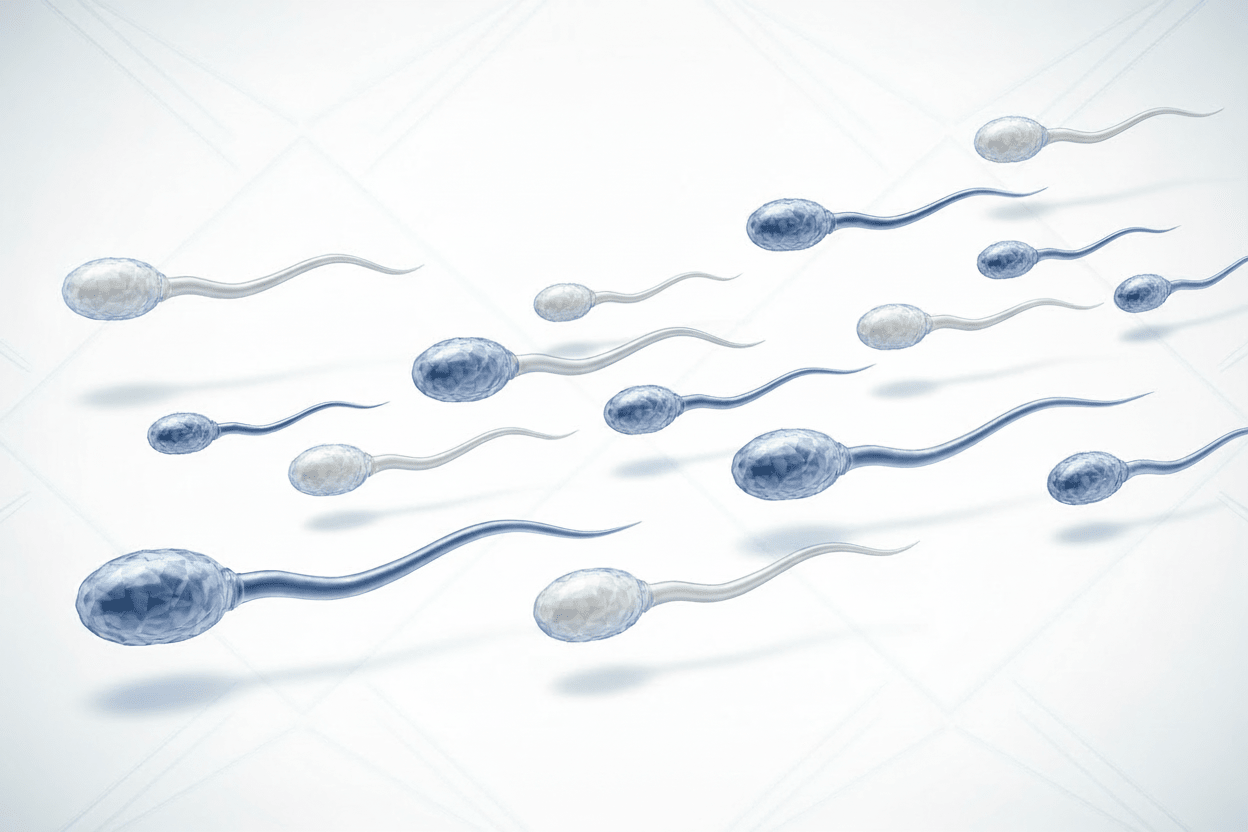
Sperm quality isn’t just about count. Clinicians assess three key parameters — and all three matter equally for conception. A high count with poor motility, for example, still significantly reduces the chances of fertilisation. Understanding which parameter needs support can help you target the right interventions.
The percentage of sperm that move correctly — specifically progressive motility, meaning forward movement toward the egg.
The proportion with normal shape and structure. Abnormal morphology affects the sperm’s ability to penetrate and fertilise an egg.
Total sperm concentration per millilitre of semen. Below 16 million/ml is considered below the normal reference range.
Lifestyle factors that damage sperm quality
Before reaching for supplements, it’s worth addressing the most common environmental and lifestyle culprits. These are the factors with the clearest evidence — and the most impact on all three sperm parameters.
-
Heat exposure
Laptops on laps, hot tubs, saunas, and tight underwear raise scrotal temperature, directly impairing sperm production. The testes operate optimally around 2°C below core body temperature.
-
Smoking
Directly linked to reduced motility, increased DNA fragmentation, and lower sperm count. The oxidative damage from cigarette toxins affects sperm at every stage of development.
-
Alcohol
Even moderate intake can lower testosterone and reduce sperm count. Regular alcohol consumption disrupts the hormonal axis that regulates sperm production.
-
Chronic stress
Elevates cortisol, which suppresses testosterone production and increases oxidative stress in the testes — a compounding effect that worsens all three sperm parameters over time.
-
Sedentary lifestyle
Associated with lower sperm parameters across multiple studies. Moderate exercise, particularly resistance training, consistently improves sperm quality and testosterone levels.
-
Processed food & trans fats
Linked to poorer morphology in multiple observational studies. Ultra-processed foods drive systemic inflammation and deplete the micronutrients essential for sperm development.
“The 74-day sperm cycle means changes you make now will show up in a semen analysis roughly 2–3 months later. Consistency matters more than perfection.”
The fertility diet for men: what to eat
Diet has a measurable impact on sperm parameters. Research consistently points to a Mediterranean-style eating pattern as most protective — rich in antioxidants, healthy fats, and micronutrients essential for sperm health.
Key nutrients with the strongest evidence
This is where targeted supplementation can make a meaningful difference — particularly for men who struggle to get adequate micronutrients from diet alone. These five ingredients have the most consistent clinical evidence behind them.
-
01CoQ10 (Coenzyme Q10)
A powerful antioxidant found in high concentrations in healthy sperm. Multiple randomised controlled trials have shown CoQ10 supplementation may improve sperm motility and concentration by protecting sperm mitochondria from oxidative damage.
-
02Ashwagandha KSM-66®
An adaptogenic herb with strong clinical evidence for reducing cortisol and supporting testosterone levels. Studies suggest men taking KSM-66® ashwagandha may see improvements in sperm count, motility, and volume over a 90-day period.
-
03Shilajit
A mineral-rich resin used in Ayurvedic medicine. Clinical studies suggest it may support total sperm count and motility through its fulvic acid content, which enhances mitochondrial energy production in sperm cells.
-
04Selenium
An essential trace mineral that acts as a cofactor for antioxidant enzymes in sperm. Selenium deficiency is consistently associated with poor motility — and many men in the UK fall below optimal levels from diet alone.
-
05Vitamin D
Vitamin D receptors are found directly on sperm cells. Low Vitamin D is consistently associated with poorer sperm parameters in observational research — and with the majority of the UK population deficient, supplementation is particularly relevant.
How long does it take to see results?
Frequently asked questions
While genetics play a role in some conditions, the majority of sperm quality issues are influenced by lifestyle, nutrition, and oxidative stress — all of which are modifiable. Genetics are rarely the primary driver in men without a diagnosed structural condition.
Ideally, start 3 months before you begin trying. This aligns with the full 74-day sperm production cycle and gives nutrients time to accumulate to effective levels in testicular tissue.
Yes. Sperm DNA fragmentation increases with age, and testosterone naturally declines from the mid-30s. However, lifestyle and nutritional interventions remain effective and evidence-backed at any age.
Absolutely. A baseline semen analysis gives you a clear picture of which parameters need support — and lets you measure progress objectively at the 3-month mark. Many private clinics and GPs can refer you.
Yes — chronic stress elevates cortisol, which directly suppresses testosterone production and increases oxidative stress in the testes. This is one of the most underappreciated drivers of male fertility decline.
Vitality Revival · Fertility Support Range
Formulated for the 74-Day Window
Five clinically studied ingredients in one daily formula — designed specifically for men and women in the preconception window. Also available as a couples bundle.

High-potency CoQ10 (300mg), zinc, and selenium to support sperm count, motility, and quality — designed specifically for men in the preconception window.

Supports egg quality, hormonal balance, and reproductive health. With methylated folate and a targeted antioxidant blend for women trying to conceive.

Both fertility formulas together — optimise his sperm health and her egg quality simultaneously. The complete couples conception protocol in one bundle.
“Taking Her Fertility for 9 weeks. My cycle length is more predictable — down from 38 to 31 days. No side effects and the ingredients list is clean. Promising product.”
“After four months my AMH improved slightly and my fertility specialist was pleased with the overall markers. I’m seeing real benefits. Would recommend to women in their mid-30s.”
“Within 6 weeks my cycles regulated and the intense cramps I used to get are almost gone. Feeling more hopeful on this TTC journey. Solid 5 stars.”



Leave a comment
All comments are moderated before being published.
This site is protected by hCaptcha and the hCaptcha Privacy Policy and Terms of Service apply.