


Vitality Revival · Knowledge Series
Why Your Hormones Are in
Silent Decline — and
What’s Really Behind It
From endocrine disruptors in everyday products to chronic stress — the forces eroding testosterone, oestrogen and progesterone are closer than you think.
Something is happening to human hormones on a civilisational scale. Testosterone has been falling for decades. Fertility rates are at historic lows. Millions of women battle progesterone deficiency without a diagnosis. This isn’t just ageing — it’s a crisis with identifiable culprits.
If you’ve ever felt persistently fatigued, noticed your body composition shifting despite no dietary changes, experienced low libido, disrupted sleep, brain fog, or a persistently flat mood — your hormones may be telling you something your blood tests aren’t catching yet.
The endocrine system — the network of glands that produce and regulate hormones — is arguably the most sensitive system in the human body. Tiny concentrations of hormones govern everything from your energy and mood to your muscle mass, bone density, and immune response. Which is precisely why the modern environment poses such a profound threat to it.
The hormones under threat
While the endocrine system produces over 50 identified hormones, a handful sit at the centre of this modern crisis. Understanding what they do — and what it feels like when they fall — is the first step.
The master anabolic hormone responsible for muscle synthesis, libido, motivation, bone density, and red blood cell production. Natural decline begins around 30, but environmental pressures are accelerating this far earlier — with some men in their 20s testing in ranges once seen only in their 50s.
Oestrogen governs reproductive health, skin integrity, cardiovascular protection, and bone density. Progesterone is its essential counterbalance — a calming, sleep-supporting hormone that too many women are losing far too young to chronic stress and endocrine disruption.
The seven major causes of decline
The data is unambiguous: hormone levels are falling across generations independent of age. A 35-year-old man today has measurably lower testosterone than a 35-year-old in 1985. This is not a genetic shift — it is environmental and lifestyle-driven.
-
01Endocrine disrupting chemicals (EDCs)
Xenoestrogens found in plastics (BPA), food packaging, cosmetics, pesticides, and receipts mimic oestrogen and interfere with natural signalling. Phthalates suppress testosterone in Leydig cells. These are measurable in blood and urine across the general population — not theoretical risks.
-
02Chronic stress & cortisol dominance
Cortisol and sex hormones share a precursor: pregnenolone. Under sustained stress, cortisol is prioritised at the expense of testosterone and progesterone — a phenomenon called “pregnenolone steal.” Modern working life creates chronic cortisol elevation that quietly depletes the hormonal system.
-
03Sleep deprivation & circadian disruption
The majority of testosterone is synthesised during deep sleep. Restricting sleep to five hours for just one week reduces testosterone by 10–15% — equivalent to ageing a decade. Blue light, irregular schedules, and poor sleep architecture disrupt pulsatile hormone release from the pituitary.
-
04Ultra-processed foods & nutritional deficiency
Hormones are built from fats and cholesterol. Low-fat diets and seed-oil-dominant ultra-processed foods create deficiencies in zinc, vitamin D, and magnesium — all essential for hormone synthesis. Most of the UK population is deficient in at least two of these.
-
05Excess body fat & aromatisation
Fat tissue contains aromatase, which converts testosterone into oestrogen. As body fat rises, aromatase activity increases — creating a feedback loop that further suppresses testosterone and drives oestrogen dominance in both men and women.
-
06Sedentary living & overtraining
Both extremes suppress hormones. Sedentariness reduces insulin sensitivity and anabolic signalling. Excessive endurance training without recovery raises cortisol and can induce functional hypogonadism. Consistent resistance training with adequate rest is the hormonal sweet spot.
-
07Microplastics & environmental contamination
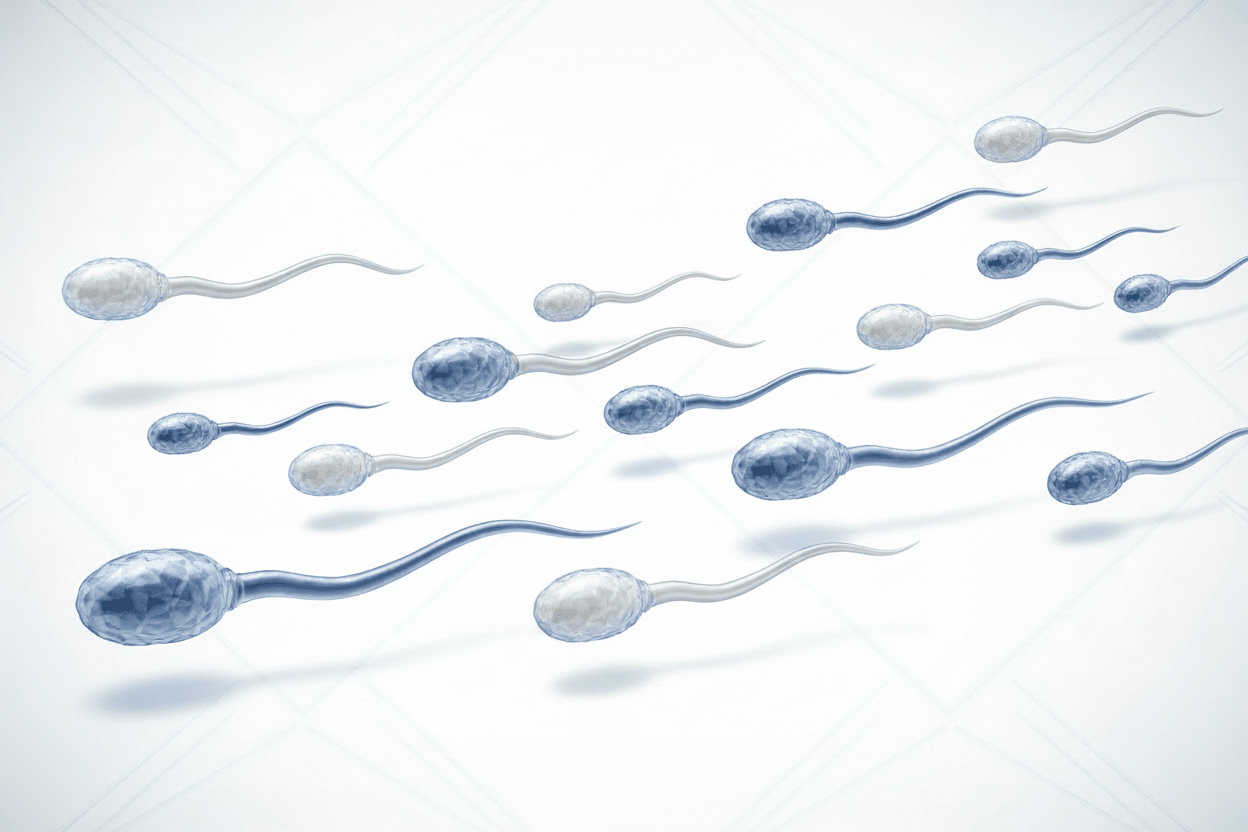
Emerging research identifies microplastics as a new hormonal threat. Found in blood, lung tissue, breast milk, and testes, microplastics carry phthalates and bisphenols. A 2023 study found them in every human testis analysed, with concentrations correlating inversely with sperm quality.
“The decline in human hormone levels is not a story of individual weakness — it is a story of an environment that has become biologically hostile to the endocrine system.”
Symptoms often missed as hormonal
Because hormonal decline is gradual, it is rarely the first diagnosis explored. The symptoms below are frequently hormonal in origin — in both men and women — and are routinely attributed to stress or ageing.
A cluster of these symptoms, alongside the lifestyle exposures described above, warrants a comprehensive hormone panel — total and free testosterone, oestradiol, SHBG, LH, FSH, progesterone, DHEA-S, cortisol, and thyroid markers — which gives a far more complete picture than standard GP testing.
Vitality Revival · Vitality Support Range
Formulated for the Modern Hormonal Environment
Science-backed, UK-made supplements targeting the exact deficiencies driving hormonal decline — for him, for her, and together.

Boosts testosterone, stamina, confidence, and gym performance with adaptogens including Ashwagandha KSM-66®. Designed to restore drive, energy, and bedroom vitality.

Supports hormone harmony, reduces fatigue, enhances glow, and reignites daily spark. Crafted for women seeking renewed energy and hormonal balance.

The ultimate vitality duo — both formulas together at a saving. Tackle hormonal decline together with the complete Him & Her Revive collection.
“Feel great after 6 weeks — my sessions at the gym have definitely got more energy. Will buy again.”
“At 42 my energy was all over the place. Now after 7 weeks I wake up feeling brighter, my mood stays even. Really pleased.”
“My cycles regulated and the intense cramps I used to get are almost gone. Feeling more hopeful on this journey.”

Leave a comment
All comments are moderated before being published.
This site is protected by hCaptcha and the hCaptcha Privacy Policy and Terms of Service apply.