

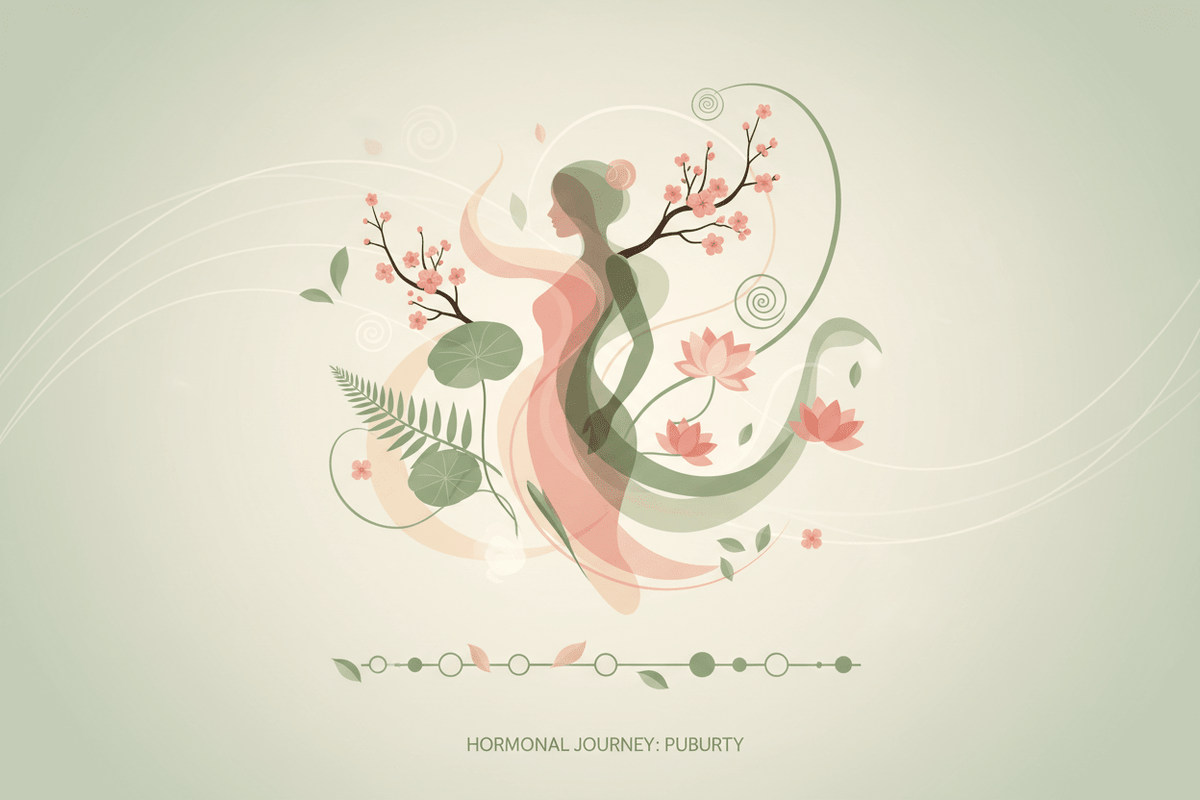
Puberty & Your Awakening Hormones
The first great hormonal shift of a woman's life — understanding what's happening in your body during puberty and why it all begins here.
Puberty is not just a physical transformation it is the body's first great hormonal awakening, a carefully orchestrated biological event years in the making.
Between the ages of 8 and 13, the brain begins sending chemical signals that set the entire female hormonal system into motion. The hypothalamus releases GnRH (gonadotropin-releasing hormone), which triggers the pituitary gland to produce FSH and LH the hormones that instruct the ovaries to begin producing estrogen. From this point forward, a woman's hormonal life is forever changed.
At , we believe that understanding your hormones from the very beginning empowers you to make informed, confident choices about your health at every stage of life. This first blog in our four-part series explores what happens hormonally during puberty, why it unfolds the way it does, and how to support your body through this pivotal transition with grace and knowledge. For a UK magazine walkthrough of what people mean by hormone balance, Women’s Health’s UK hormone-balancing guide is education — not a protocol.
Hormones That Come Alive in Puberty
Several hormones surge into action during puberty, each playing a distinct and important role in shaping the female body and mind.
The dominant hormone of puberty — responsible for breast development, widening of the hips, growth of the uterus, and the initiation of the menstrual cycle.
Begins to be produced after the first ovulation, working to regulate the menstrual cycle and prepare the body for potential pregnancy each month.
Released by the pituitary gland to trigger the ovaries to produce estrogen and, in time, to ovulate — the key messengers of the reproductive axis.
Present in girls in small amounts, testosterone drives growth spurts, emerging libido, and contributes to mood, confidence, and energy during adolescence.
What Actually Happens — Step by Step
Puberty in girls typically unfolds over 2–5 years, though the hormonal changes begin even before any physical signs appear. Here is how the journey progresses:
- Thelarche (breast development) — Usually the first visible sign, triggered by rising estrogen. Can begin anywhere from age 8 to 13.
- Adrenarche — The adrenal glands begin producing androgens, causing the growth of pubic and underarm hair and the beginning of body odour changes.
- Growth spurt — Estrogen and growth hormone together drive the rapid increase in height. Girls typically reach their adult height within 2 years of their first period.
- Body composition shifts — Estrogen directs fat to be stored around the hips, thighs, and breasts — a natural, necessary process for reproductive health and hormonal production.
- Menarche (first period) — The culmination of the process, signalling the hormonal cycle is now in motion. Early cycles are often irregular as the system calibrates.
- Emotional and cognitive shifts — Fluctuations in estrogen and progesterone influence serotonin and dopamine, contributing to the emotional intensity many adolescents experience.
The emotional turbulence of puberty is not a flaw in the design — it is a direct reflection of the most dramatic hormonal shift a young woman will ever experience.
Irregular periods in the first 1–2 years after menarche are entirely normal. The HPO (hypothalamic-pituitary-ovarian) axis the communication system between the brain and ovaries — takes time to mature and settle into a consistent, reliable rhythm.
Supporting Hormonal Health From the Start
The foundations of lifelong hormonal health are laid during puberty. The habits and environment of adolescence have a lasting influence on how the hormonal system develops and functions throughout a woman's life.
Nutrition matters enormously. Adequate body fat is essential for hormone production — girls who restrict calories severely or over-exercise may experience delayed puberty or loss of periods. Iron, zinc, magnesium, and omega-3 fatty acids are particularly important during this stage.
Sleep is non-negotiable. Growth hormone is released primarily during deep sleep, and adolescents need 8–10 hours. Poor sleep disrupts the cortisol rhythm, which cascades into effects on estrogen and progesterone production and emotional regulation.
Stress has a real hormonal cost. Chronic stress elevates cortisol, which suppresses sex hormones. Mindfulness, creative outlets, time in nature, and supportive relationships all help buffer this effect during a sensitive developmental window.
Reduce xenoestrogen exposure. Plastics, certain cosmetics, and pesticide-treated foods contain chemicals that mimic estrogen in the body. During puberty, when the hormonal system is newly forming, reducing exposure where possible is a meaningful and worthwhile preventive step.
5 Ways to Build a Healthy Hormonal Foundation
Prioritise Iron-Rich Foods
Menstruation brings monthly iron loss. Lean red meat, lentils, spinach, and pumpkin seeds help maintain levels and prevent the fatigue that so often accompanies periods.
Track the Cycle Early
Encouraging cycle tracking from the first period builds body literacy and creates a personal baseline — making it far easier to spot irregularities later in life.
Support Gut Health
The gut microbiome plays a key role in estrogen metabolism. A fibre-rich diet with fermented foods lays the groundwork for healthy hormonal clearance throughout life.
Reduce Plastic Exposure
Switch to glass or stainless steel containers, avoid heating food in plastic, and choose fragrance-free toiletries to minimise xenoestrogen load during this sensitive stage.
Normalise the Conversation
Open, informed conversations about periods and hormones reduce shame and anxiety — and make it far easier to seek help when something feels wrong or unusual.
A note on products
This piece is puberty education. Vitality Revival formulas are for adults: Her Revive for adult cycle/peri support, Her Fertility when an adult is in a preconception window. Keep them off adolescent shelves.


Leave a comment
All comments are moderated before being published.
This site is protected by hCaptcha and the hCaptcha Privacy Policy and Terms of Service apply.